AC Replacement Cost Guide for Arizona Homes
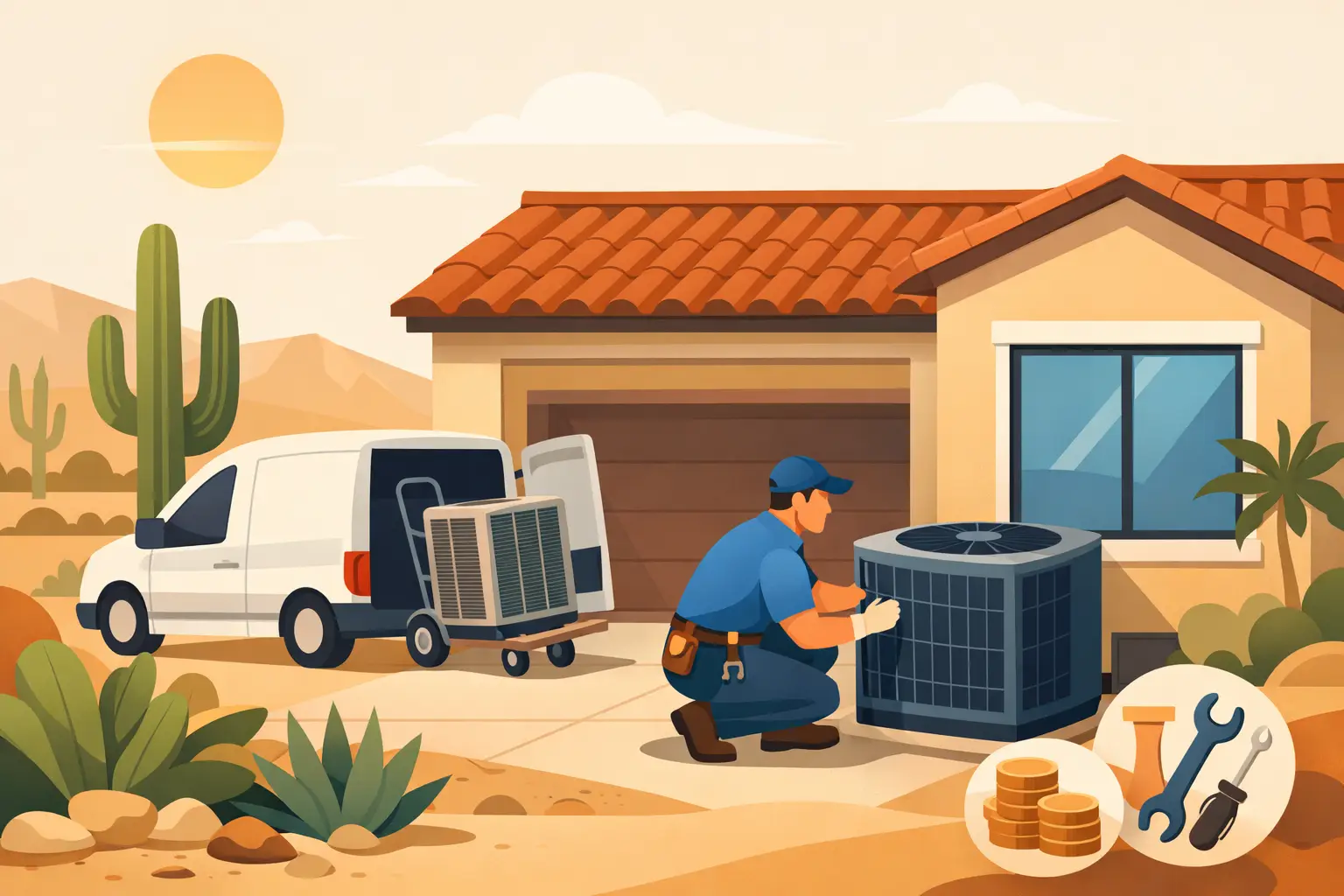
When an air conditioner fails during a Tempe summer, the first question is usually not about SEER ratings or equipment brands. It is, “What will it cost to replace it?” This AC replacement cost guide gives Arizona homeowners, landlords, and small property managers a practical way to understand the estimate before making a decision under pressure.
A new central AC system is a major home investment, especially in Maricopa County, where cooling equipment works harder and longer than it does in many parts of the country. The right replacement is not always the lowest-priced unit. It is the system that is properly sized, professionally installed, and capable of keeping the building comfortable without creating avoidable operating or repair costs.
What Does AC Replacement Usually Cost in Arizona?
For a typical home, a complete central air conditioning replacement commonly falls in the range of $6,000 to $15,000 or more. That broad range reflects real differences between homes, system sizes, efficiency levels, electrical needs, and installation conditions. Larger homes, premium equipment, ductwork corrections, or difficult access can move a project above that range.
A basic replacement may involve a standard-efficiency condenser and air handler or furnace connection using existing, serviceable ductwork and electrical components. At the higher end, the project may include a high-efficiency heat pump, upgraded indoor equipment, new thermostats, electrical modifications, duct repairs, or zoning-related work.
The only dependable way to price a replacement is through an on-site evaluation. A responsible estimate should account for the whole system, not just the outdoor unit sitting beside the house.
The Main Factors That Change Replacement Pricing
System size and cooling load
Air conditioners are sized in tons, but a larger unit is not automatically better. A contractor should consider square footage, ceiling height, insulation, window exposure, duct design, occupancy, and the intense Arizona sun. This process is often called a load calculation.
An undersized system may run continuously and struggle during peak heat. An oversized system can cool too quickly, cycle on and off excessively, and fail to manage humidity as effectively during milder periods. Either problem can shorten equipment life and leave you paying for comfort you are not receiving.
Efficiency rating and equipment type
Higher-efficiency systems generally cost more upfront, but they can reduce electricity use over time. In Arizona, where AC often runs for much of the year, efficiency deserves more consideration than it might in a cooler climate.
The best choice depends on how long you expect to own the property, your monthly utility priorities, and the condition of the rest of the HVAC system. A landlord preparing a rental for turnover may prioritize reliable, serviceable equipment. A homeowner planning to stay for 10 years may see greater value in higher efficiency and comfort features.
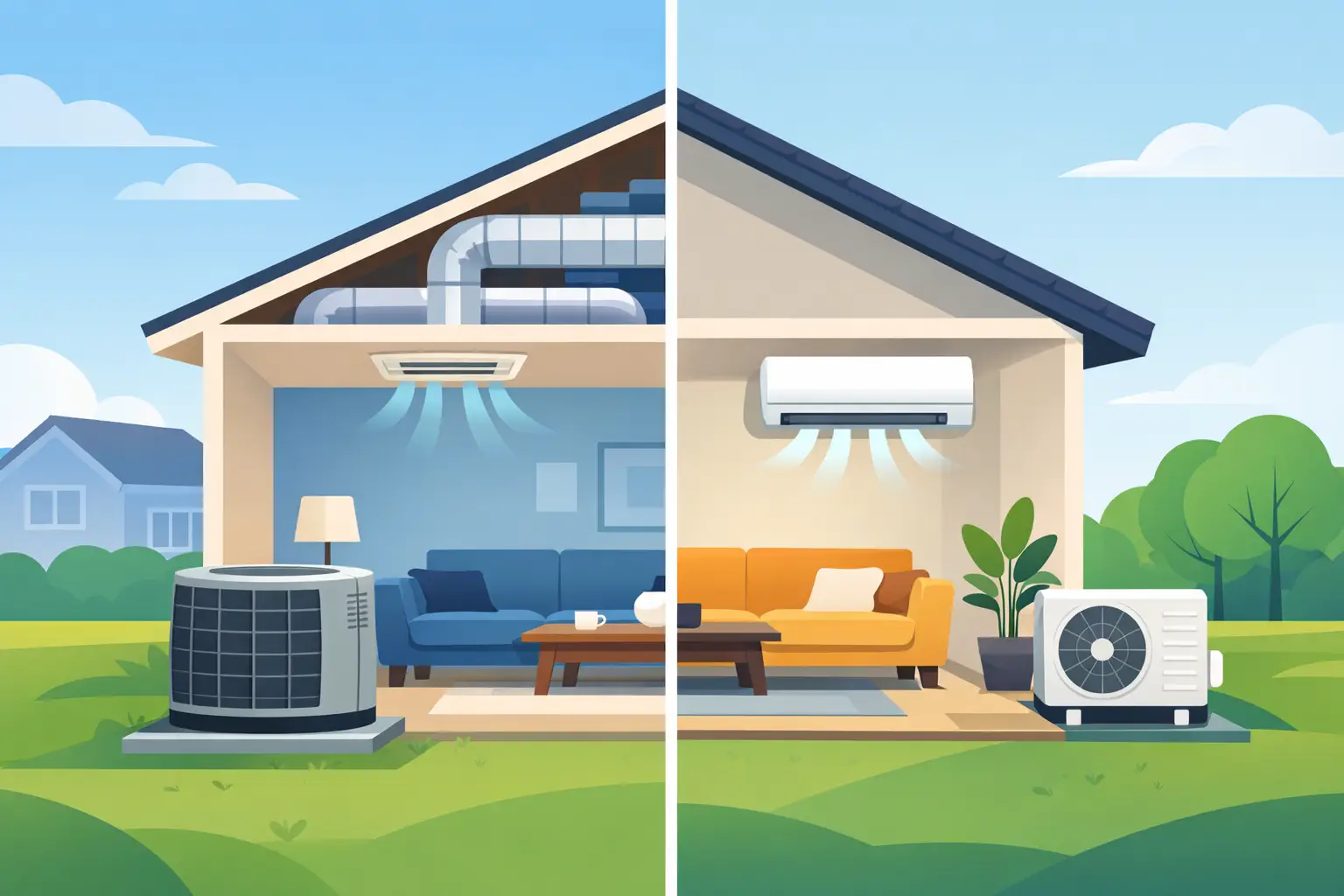
You may also choose between a conventional split system and a heat pump. A heat pump provides cooling in summer and heating in winter, which can make sense for many Arizona homes. The right option depends on your existing equipment, electrical capacity, heating needs, and budget.
Indoor equipment and refrigerant compatibility
Replacing only the outdoor condenser is sometimes possible, but it is not always the smart or compliant choice. Older indoor coils may be incompatible with newer equipment or refrigerant requirements. Mismatched components can hurt efficiency, cause performance issues, and affect warranty coverage.
If the indoor coil, air handler, or furnace is near the end of its service life, replacing it at the same time can prevent another major disruption a few years later. It may raise the initial estimate, but it can result in a better-matched, more dependable system.
Ductwork condition
Leaky, undersized, poorly insulated, or damaged ducts can make a new AC system look like a disappointment. Cool air that escapes into an attic, garage, or wall cavity does not help the rooms where people live and work.
Not every replacement requires new ductwork. However, duct sealing, targeted repairs, added returns, or redesigned sections may be needed to get the expected performance from the new equipment. For homes with hot bedrooms, uneven temperatures, or weak airflow, this part of the evaluation matters.
Electrical, drainage, and installation access
Older homes sometimes need electrical upgrades to support modern HVAC equipment safely. A replacement may also require a new disconnect, whip, breaker, surge protection, condensate drain improvements, or a new equipment pad.
Access affects labor as well. Attic air handlers, tight mechanical closets, rooftop commercial units, and cramped side yards can take more time and planning than an easy ground-level installation. These details are not extras invented after the fact. They are part of doing the job correctly.
What a Complete Replacement Estimate Should Include
Comparing two estimates is difficult if one contractor gives a single total and another explains the scope. Ask for a written proposal that identifies the equipment being installed and the work required to support it.
A clear estimate should address equipment model information, system capacity, efficiency rating, labor, permits when required, startup and testing, warranty details, and any known electrical, duct, drain, or thermostat work. It should also state whether the price includes removal and proper disposal of the old equipment.
Be cautious with an unusually low estimate that does not explain these items. A low price can be legitimate when the scope is simple, but it can also leave out necessary work. The cost of correcting shortcuts later is rarely a bargain in an Arizona summer.
Repair or Replace: How to Make the Call
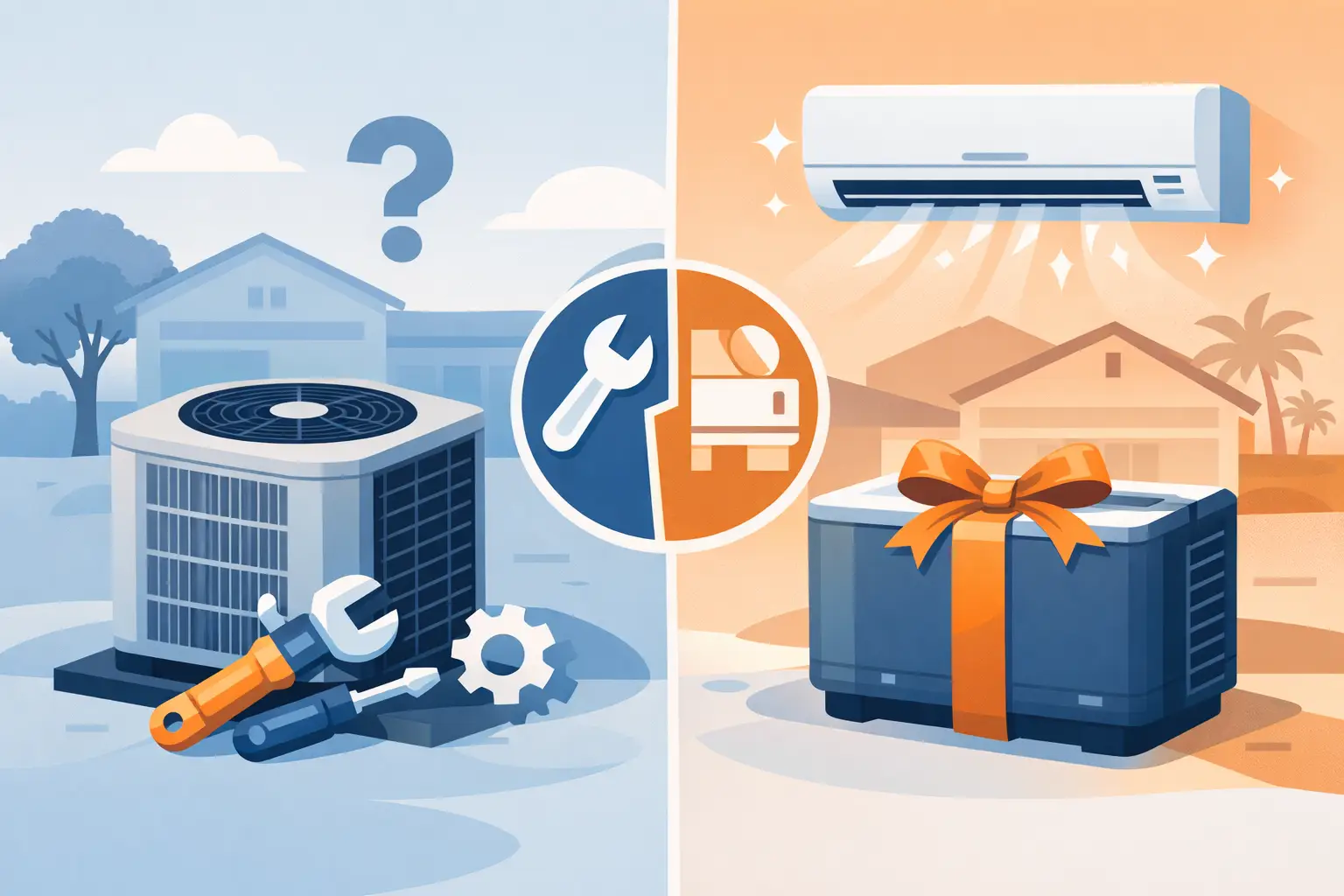
Replacement is not always the answer. If a system is relatively young, has been maintained, and needs a straightforward repair, fixing it may be the sensible path. A good HVAC contractor should be willing to explain both options.
Replacement becomes more practical when the unit is older, has recurring breakdowns, uses outdated refrigerant, or requires a costly major component such as a compressor or coil. Comfort problems and rising utility bills also deserve attention, particularly if the system has never cooled evenly.
One useful way to think about the decision is not just the cost of today’s repair, but what the repair buys you. Spending a modest amount on a reliable repair may give you several more years of service. Spending a large amount on an aging unit with a history of problems may only delay a replacement that is already coming.
For rental properties and small commercial spaces, downtime is another cost. A system that repeatedly fails can mean unhappy tenants, lost productivity, emergency service calls, and rushed replacement decisions. Planning ahead when the equipment is still operating can provide more control over the budget and installation schedule.
How to Budget Without Cutting the Wrong Corners
Start by setting priorities: immediate affordability, lower operating costs, long-term reliability, quieter operation, or improved room-to-room comfort. Most replacement decisions involve a trade-off, and there is no single right answer for every property.
If budget is tight, focus first on correct sizing, quality installation, and dependable equipment. Those fundamentals generally matter more than paying for advanced features you may not use. At the same time, do not choose a system solely because it has the lowest initial price. Improper installation, poor airflow, and mismatched components can erase the savings quickly.
Ask about available financing, manufacturer promotions, and utility-related incentives if applicable. Terms and availability can change, so treat those options as part of the conversation rather than the reason to select a particular system.
Questions to Ask Before Approving a Replacement
Before signing an estimate, ask how the system size was determined and whether the existing ductwork will support the new equipment. Confirm what is included in the price, what could create additional cost, and how the contractor will protect your home during installation.
It is also reasonable to ask about licensing, insurance, warranty registration, and who will handle the work. HVAC replacement is not a purchase you want to make twice because the first installation was rushed. For a home or business in Tempe and Maricopa County, local experience matters because the equipment must be selected and installed for sustained desert heat.
SMW Refrigeration & Heating has served local customers since 1964, and the same practical standard applies to every replacement conversation: provide a clear assessment, explain the options, and recommend work that fits the property rather than pushing a one-size-fits-all answer.
A planned replacement can be far less stressful than an emergency changeout at the hottest point of summer. If your system is aging, noisy, unreliable, or struggling to keep up, arrange an evaluation while you still have time to compare options and choose the equipment that will serve your property well.
Need HVAC Service?
Call SMW Refrigeration & Heating for expert service throughout Maricopa County.
Call (602) 992-1930Related service
HVAC replacement & system pricing →