Best Thermostat Settings for Summer in Tempe
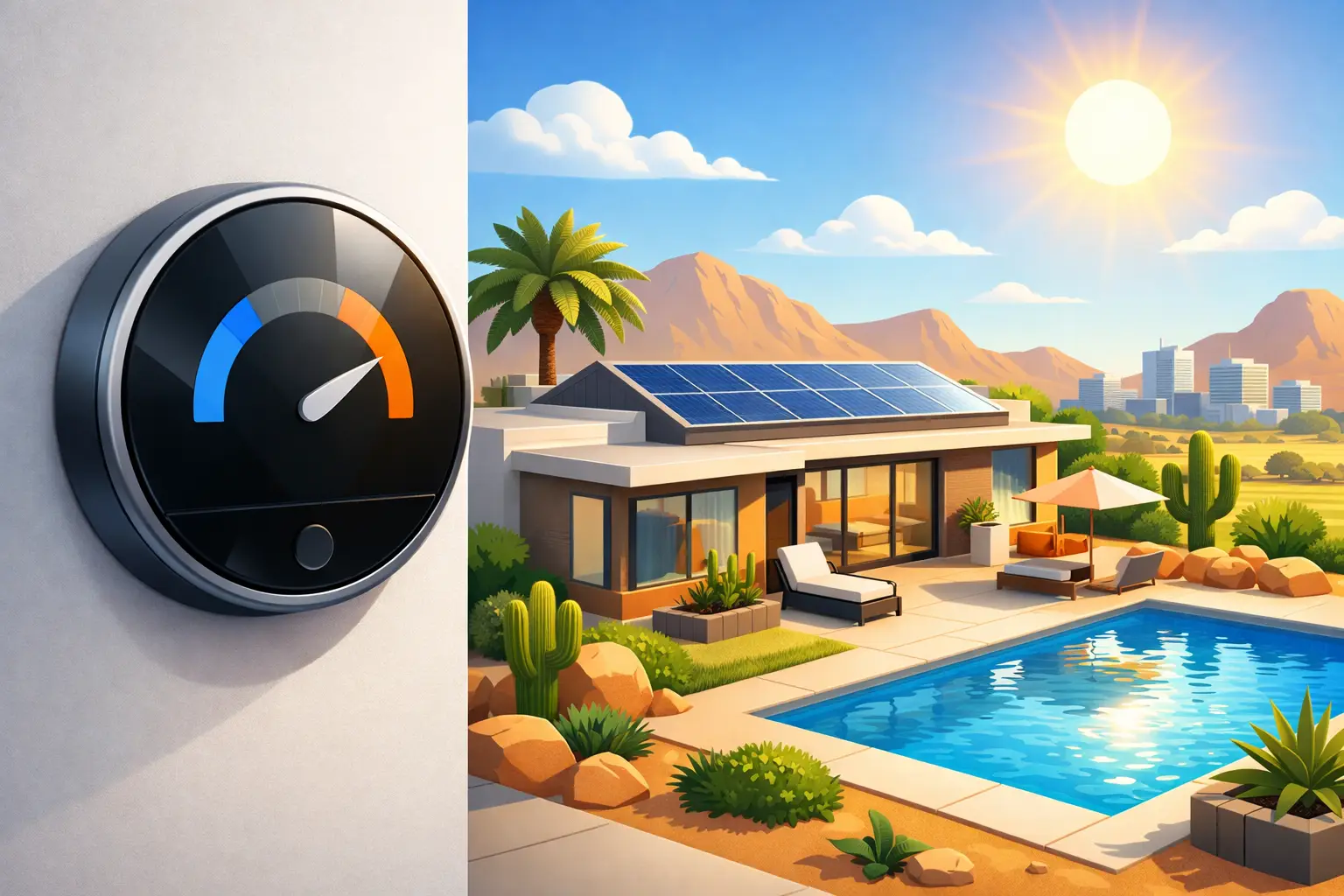
A Tempe air conditioner can run for most of the day when outdoor temperatures stay above 100 degrees. That is why the phrase “best thermostat settings summer” is not just about saving a few dollars. It is about keeping your home comfortable without pushing your AC system harder than necessary during the most demanding part of the year.
There is no single temperature that works perfectly for every household. Your ideal setting depends on insulation, sun exposure, the age and condition of your equipment, how many people are home, and how well your system maintains humidity and airflow. Still, a few practical temperature targets give most Maricopa County homeowners a dependable place to start.
Best Thermostat Settings for Summer in Tempe
For most occupied homes, set the thermostat between 76 and 78 degrees. This range is often the best balance between comfort and air conditioning operating costs in Arizona. If 78 feels warm at first, use ceiling fans to improve air movement rather than immediately dropping the thermostat several degrees.
When everyone is away for several hours, raise the setting to 82 to 85 degrees. Your home will gain heat while it is empty, but setting the thermostat higher reduces unnecessary runtime. In a well-maintained home, the AC can bring temperatures back down when residents return without needing to run at full capacity all day.
At night, many households prefer 74 to 76 degrees for sleep. That is reasonable if it helps you rest, but remember that every degree lower can add to your cooling costs. Bedrooms on a west-facing wall, upstairs rooms, and spaces with limited airflow may feel warmer than the thermostat reading suggests. Before lowering the whole-house setting, check whether a fan, closed blinds, or an airflow adjustment will solve the problem in that specific room.
The practical goal is consistency. In extreme heat, turning the thermostat down to 68 or 70 will not make the air conditioner cool the house faster. Most residential systems cool at a steady rate. A much lower setting simply tells the system to run longer, which can increase wear and leave you disappointed if the equipment cannot overcome the afternoon heat load.
Use a Schedule That Matches Your Household
A programmable or smart thermostat can help, but it should follow your real routine. A schedule that looks efficient on paper is not useful if family members work from home, pets stay indoors, or tenants come and go throughout the day.
For a typical household that leaves in the morning and returns in late afternoon, try keeping the home at 76 to 78 degrees while occupied, raising it to 82 degrees after everyone leaves, then returning it to your preferred comfort setting about 30 to 60 minutes before people get home. In a larger home or one with significant afternoon sun exposure, it may take longer to recover. Adjust the schedule gradually until it fits your system.
If someone is home all day, avoid wide temperature swings. Raising the setting a few degrees during the hottest hours may help reduce AC demand, but allowing the house to become excessively hot can make it harder to regain comfort later. This is especially true in homes with poor insulation, older windows, or rooms that receive direct western sun.
For rental properties and small commercial spaces, the same principle applies. Set reasonable occupied and unoccupied temperatures, but do not let the building sit at extreme temperatures for long periods. High indoor heat can affect comfort, place stress on equipment, and create concerns for pets, electronics, or temperature-sensitive supplies.
Do Not Turn the AC Off When You Leave
In Tempe, shutting the AC completely off during the day is usually not the best money-saving move. Indoor temperatures can climb quickly, particularly in older homes or buildings with limited shade. The system may then need to run for hours to recover when you return.
A higher away setting is generally a better choice than turning the equipment off. It limits cooling while helping protect the home from excessive heat buildup. If you will be away for an extended trip, 85 degrees is often a practical starting point, though homes with pets, plants, or sensitive belongings may need a lower setting.
Fans, Blinds, and Filters Make a Real Difference
Thermostat settings work best when the rest of the home supports the cooling system. Ceiling fans do not lower the air temperature, but they move air across your skin and can make a room feel several degrees more comfortable. Run ceiling fans counterclockwise in summer, then turn them off when the room is empty. Fans cool people, not unoccupied rooms.
Keep blinds and curtains closed on sun-facing windows, especially on the west side of the home during late afternoon. Blocking solar heat before it enters the house can reduce the workload on your air conditioner. Weatherstripping around exterior doors and properly sealed ductwork also matter more than many homeowners realize.
A clean air filter is one of the simplest ways to support airflow. A clogged filter can make the system run longer, reduce comfort in distant rooms, and contribute to frozen evaporator coils in some circumstances. Check the filter monthly during the heaviest cooling season and replace it based on the filter type, household conditions, pets, and visible buildup.
When a Thermostat Setting Is Not the Real Problem
If your thermostat is set to 78 but the home stays at 84, the issue may be the air conditioner, not the setting. During a major heat wave, it is normal for a system to run for long stretches. It is not normal for it to blow warm air, repeatedly cycle on and off, leak water indoors, trip breakers, or fall far behind without recovering after sunset.
Uneven temperatures are another sign worth investigating. One hot room could be caused by a closed or blocked vent, poor return-air flow, attic heat, duct leakage, or an undersized system. It could also be a thermostat location problem. A thermostat installed near a sunny window, kitchen, exterior door, or supply vent may not accurately represent the temperature throughout the home.
Avoid closing multiple supply vents in an attempt to force more air into other rooms. Modern systems are designed around a specific amount of airflow. Closing too many vents can increase static pressure, reduce system efficiency, and create comfort problems elsewhere. A qualified HVAC technician can identify whether the issue is airflow, duct design, insulation, equipment capacity, or a failing component.
Give Your System a Fair Test
On a 110-degree afternoon, a healthy system may not hold the exact temperature it reaches overnight, especially in a home with high heat gain. Instead of judging performance at the hottest point of the day alone, look for patterns. Does the AC cool normally in the morning? Is airflow strong from the vents? Does it catch up during the evening? Has the electric bill changed sharply without a change in your routine?
These details help separate normal Arizona summer demand from a problem that needs service. Preventive maintenance before or during the cooling season can catch worn electrical components, dirty coils, drainage issues, and refrigerant concerns before they turn into a no-cool call.
A Practical Starting Point for Arizona Homes
If you need a simple plan, start at 77 degrees when home, 82 degrees when away, and 75 degrees at night if that is comfortable for your household. Keep interior doors open where possible to support return airflow, use fans in occupied rooms, and keep sun-blocking window coverings closed through the afternoon.
Then make small adjustments instead of major changes. If 77 is consistently comfortable, try 78 for a week. If a bedroom is too warm, address that room’s airflow and sun exposure before lowering the thermostat for the entire house. This approach protects comfort while giving your air conditioner a more manageable workload.
When your system cannot maintain a reasonable setting, do not spend the hottest weeks of summer guessing at the cause. SMW Refrigeration & Heating has served Tempe and Maricopa County since 1964, with experienced service for cooling problems, maintenance needs, and urgent AC breakdowns. A properly operating system, paired with a realistic thermostat setting, gives your home the best chance of staying comfortable through the Arizona heat.
Need HVAC Service?
Call SMW Refrigeration & Heating for expert service throughout Maricopa County.
Call (602) 992-1930Related service
HVAC replacement & system pricing →