How to Reset a Tripped Air Conditioner Breaker
A breaker trip during a Tempe summer is more than an inconvenience. If your AC has stopped cooling, knowing how to reset a tripped air conditioner breaker can help you restore power safely - but only when the trip was a one-time event. A breaker that trips again is doing its job: protecting your home, wiring, and air conditioning equipment from an electrical problem.
Before touching the electrical panel, turn your thermostat to Off. Then take a moment to look for signs of trouble, such as a burning smell, buzzing near the panel, water around the outdoor unit, or a breaker that feels hot. Any of these signs calls for a professional, not a reset.
How to Reset a Tripped Air Conditioner Breaker Safely
Your air conditioner may use one or two breakers in the main electrical panel. A split-system AC commonly has a double-pole breaker for the outdoor condenser, while the indoor air handler may have its own breaker. Check the panel directory, but do not assume every label is current or accurate.
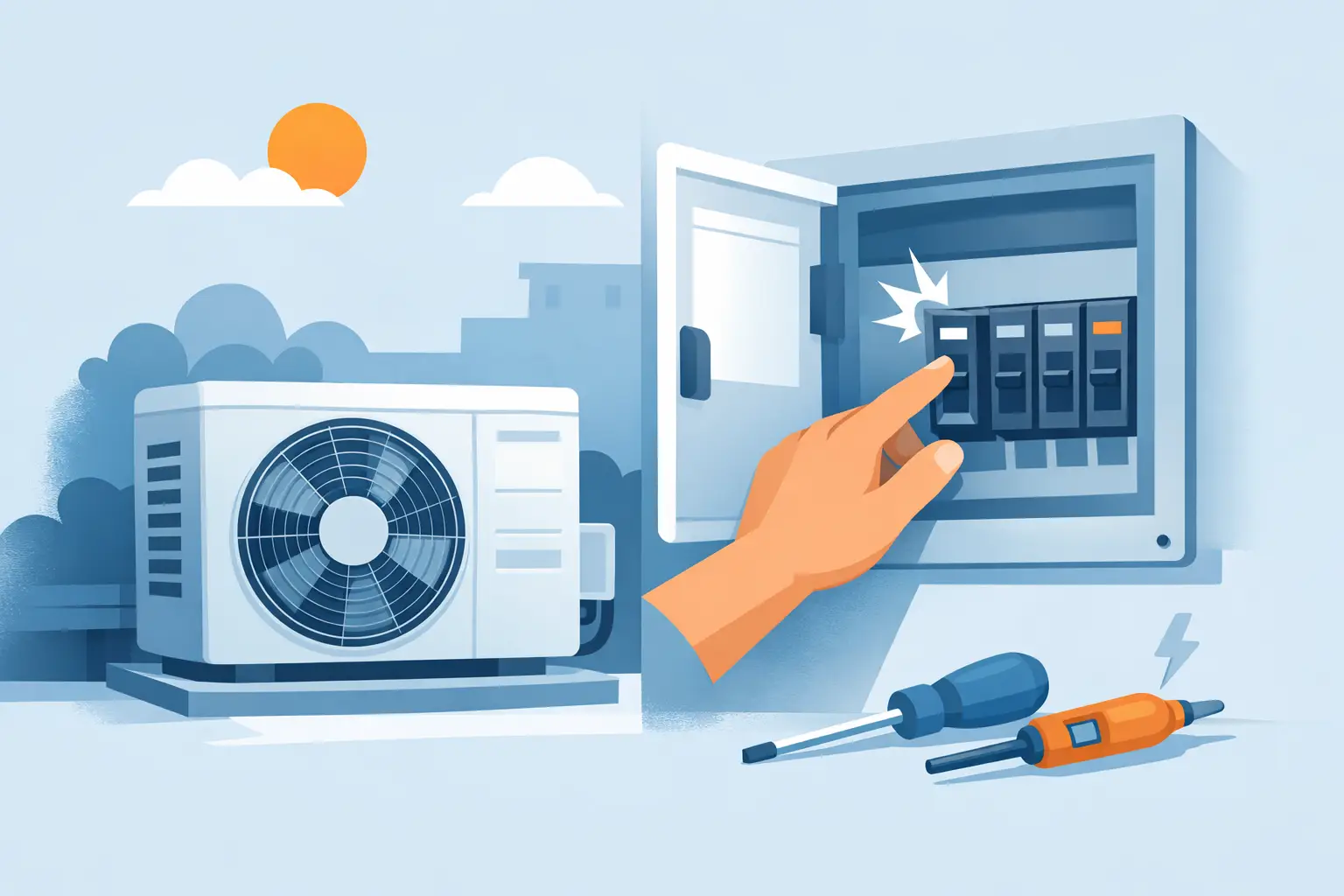
A tripped breaker does not always sit fully in the Off position. It may be resting in the middle, between On and Off. To reset it, move the breaker firmly all the way to Off first. Then move it firmly back to On. You should feel it click into place.
After resetting the breaker, wait about five minutes before turning the thermostat back to Cool. Set it several degrees below the current indoor temperature and listen for the system to start. The indoor blower may come on first, followed by the outdoor unit.
If the breaker stays on and the system cools normally, keep an eye on it for the rest of the day. One isolated trip can happen during a power fluctuation or an unusually heavy startup load. It still deserves attention if it becomes a pattern.
Do not repeatedly reset the breaker
Reset the breaker once. If it trips immediately, trips when the outdoor unit starts, or trips again later that day, leave it off and arrange HVAC service. Repeatedly forcing a breaker back on can damage the compressor, overheat electrical components, or create a fire risk.
Avoid replacing a breaker with a larger size or holding it in the On position. Breaker sizing is tied to the wire size and the manufacturer requirements for your HVAC equipment. That work belongs to a qualified technician or electrician.
Why an Air Conditioner Breaker Trips
An air conditioner draws a large amount of electricity, especially at startup. A breaker trips when it detects a condition that could overheat the circuit or damage the equipment. The exact cause matters because some problems are minor maintenance issues, while others require an urgent repair.
A dirty filter or restricted airflow
A severely clogged air filter can restrict airflow across the indoor coil. The system may run longer than it should, freeze up, or place extra strain on components. While a dirty filter is not the only reason a breaker trips, changing it is a sensible first check.
Use the filter type and replacement schedule recommended for your system. In Arizona, dust, pet hair, and long cooling seasons can make monthly inspections worthwhile. Do not install an overly restrictive filter simply because it has a high rating. Some systems need a specific filter type to maintain proper airflow.
A dirty outdoor coil or blocked condenser
The outdoor condenser releases heat from your home. When its coil is packed with dust, cottonwood, grass clippings, or debris, the unit has to work harder to move heat outdoors. That added workload can increase electrical demand.
With power off at the disconnect, remove leaves and loose debris from around the unit. Keep shrubs and stored items away from it so air can move freely. Do not bend the coil fins or use a high-pressure spray, which can cause more damage than it solves.
A failing capacitor, contactor, or compressor
The outdoor unit relies on electrical parts to start and run properly. A weak capacitor can make the compressor or fan motor struggle to start. A worn contactor can create inconsistent operation. In older equipment, the compressor itself may be drawing excessive current.
These are not homeowner repairs. Capacitors can hold an electrical charge even after power is shut off, and diagnosing amp draw requires proper tools and training. If the breaker trips as soon as the condenser tries to start, a technician should evaluate the unit before it is powered again.
A damaged wire or electrical short
Rodent damage, worn insulation, loose connections, storm damage, and age can all affect AC wiring. A short circuit often causes a breaker to trip immediately when reset. You may also notice a burned odor, visible discoloration, or a breaker that will not stay engaged.
Do not remove the electrical-panel cover to investigate. The panel contains energized components even when individual breakers are off. Call a licensed HVAC professional or electrician for safe diagnosis.
A frozen evaporator coil or drainage problem
Low refrigerant, poor airflow, and blower problems can cause the indoor evaporator coil to freeze. As the ice melts, water may overflow the drain pan or trigger a float safety switch. Depending on how the system is wired, this may stop cooling or contribute to electrical issues.
If you see ice on the refrigerant line or water near the indoor unit, turn the thermostat Off. Set the fan to On only if it is operating normally, which can help thaw the coil. Then schedule service to identify why it froze in the first place.
When a Reset Is Reasonable - and When It Is Not
A one-time reset may be reasonable after a known neighborhood power interruption, a lightning event, or an isolated electrical fluctuation. It can also be appropriate when the system was shut down for cleaning and you have verified there is no visible damage or safety concern.
A reset is not a repair. Do not reset the breaker if it has tripped more than once, if the air conditioner is making loud humming or grinding sounds, or if you smell burning. The same applies when the breaker is hot, the outdoor unit will not start, or lights dim sharply when the AC attempts to run.
For landlords and small commercial property managers, repeated breaker trips should be addressed quickly. Waiting can turn a manageable electrical or airflow problem into a full system outage, an unhappy tenant, or a disrupted workday.
Checks to Make Before Calling for AC Repair
After leaving the breaker off if it has retripped, check a few basic items that do not involve opening electrical equipment. Make sure the thermostat is set to Cool and has fresh batteries if applicable. Confirm the air filter is clean and properly installed. Look at the outdoor unit from a safe distance for debris, ice, or obvious damage.
You can also check the exterior AC disconnect box near the condenser to make sure it has not been switched off accidentally. Do not open the disconnect or handle damaged wiring. If you are unsure what you are looking at, it is better to leave it alone.
When you call for service, share when the breaker tripped and what happened just before it did. Mention whether the indoor blower ran, whether the outdoor fan started, any unusual sounds, and whether the breaker trips immediately or after several minutes. Those details help the technician narrow the diagnosis faster.
Preventing Future AC Breaker Trips
Preventive maintenance is the best way to catch electrical wear, dirty coils, weak capacitors, and airflow problems before they interrupt cooling. A professional tune-up includes checking electrical connections, measuring system performance, inspecting moving parts, and cleaning components as needed.
Homeowners can help by replacing filters regularly, keeping the condenser clear, and paying attention to changes in sound or cooling performance. An AC that runs longer, cools unevenly, or makes new noises is worth checking before the hottest part of the season.
SMW Refrigeration & Heating has served Tempe and Maricopa County since 1964, providing dependable repair support when cooling equipment cannot wait. If your breaker will not hold or your AC is not running normally after one safe reset, leave the system off and have the cause checked properly. A quick response now can protect your comfort, your equipment, and your home’s electrical system.
Need HVAC Service?
Call SMW Refrigeration & Heating for expert service throughout Maricopa County.
Call (602) 992-1930Related service
AC repair & air conditioning service in Tempe →