How to Stop Air Conditioner Short Cycling
When your AC starts, runs for only a few minutes, shuts off, then starts again before your home feels comfortable, you need to stop air conditioner short cycling quickly. In Tempe and across Maricopa County, repeated short cycles can drive up electric bills, leave rooms unevenly cooled, and put unnecessary strain on equipment that already works hard through a long Arizona summer.
A healthy air conditioner should run long enough to remove heat from the house and satisfy the thermostat. The exact runtime changes with outdoor temperature, insulation, thermostat settings, and system size. But frequent on-and-off operation every few minutes is not normal, especially if it happens during the hottest part of the day.
What Air Conditioner Short Cycling Means
Short cycling occurs when an air conditioner turns off before completing a normal cooling cycle, then restarts again shortly afterward. Instead of steady cooling, the system repeatedly starts and stops.
This matters because startup is one of the most demanding moments for an AC system. The compressor and electrical components draw substantial power when the unit kicks on. Repeating that process over and over can increase wear on contactors, capacitors, the compressor, and other components. It can also make indoor humidity control less effective, although low humidity is less often the main complaint in our desert climate.
A single unusual cycle is not always a reason to panic. A thermostat adjustment, a passing cloud, or a door left open can change how long the system runs. The concern is a consistent pattern: the unit starts, shuts down within a few minutes, and repeats without bringing the indoor temperature down.
Common Reasons an AC Short Cycles
The cause can be simple, or it can point to a repair that should not wait. Accurate diagnosis matters because replacing a part without finding the underlying problem can lead to another service call and more expense.
A dirty air filter restricts airflow
A clogged filter is one of the first things to check. Your air conditioner needs a consistent volume of return air moving across the indoor evaporator coil. When a filter is packed with dust, pet hair, or construction debris, airflow drops. The coil can become too cold and may begin to freeze, causing the system to cycle improperly or shut down on a safety control.
Check the filter monthly during heavy cooling season. If it looks gray, matted, or visibly clogged, replace it with the correct size and type. A more restrictive high-efficiency filter is not always better for every system. If airflow has been an issue, ask an HVAC professional which filter rating is appropriate for your equipment.
The thermostat is in the wrong location or has a problem
A thermostat located near a sunny window, kitchen, supply vent, lamp, or other heat source can read the room incorrectly. It may think the house has reached the set temperature before the rest of the home is comfortable. Low batteries, loose wiring, poor calibration, and aging thermostat components can create similar symptoms.
Before assuming the AC has failed, confirm the thermostat is set to COOL, the fan is set to AUTO, and the temperature setting is below the current indoor temperature. Replace batteries if applicable. If the display is blank, erratic, or the system turns on and off at seemingly random times, it is time for a technician to inspect the controls and wiring.
The outdoor unit cannot get rid of heat
The outdoor condenser releases the heat removed from your home. Leaves, dust, grass clippings, and desert debris can block airflow through the coil. A dirty condenser coil makes the system work at higher pressure and temperature, which may trigger protective shutdowns or contribute to short cycling.
Keep at least two feet of clear space around the outdoor unit. Do not stack boxes, patio furniture, or landscaping against it. You can gently remove loose debris from around the cabinet with the power off, but do not bend the delicate coil fins or spray electrical components. A thorough coil cleaning is part of professional maintenance.
Refrigerant problems can affect cycle length
Low refrigerant is not a normal part of AC operation. If the charge is low, there is typically a leak somewhere in the system. Low refrigerant can cause the evaporator coil to freeze, reduce cooling capacity, and make the compressor operate under harmful conditions.
Signs may include weak cooling, ice on the refrigerant line or indoor coil, hissing sounds, or warm air from the vents. Turn the system off if you see ice and call for service. Continuing to run a frozen system can damage the compressor and may turn a repairable issue into a larger replacement decision.
An oversized AC can cool too fast
A system that is too large for the home can lower the thermostat temperature very quickly without running long enough to distribute cooled air evenly. This problem is more likely after a replacement if equipment was selected based only on the size of the old unit or a simple square-foot estimate.
Proper sizing requires more than square footage. A contractor should account for insulation, window area and direction, ceiling height, home layout, duct condition, occupancy, and local heat load. In Arizona, sun exposure and ductwork in hot attic spaces can make a major difference. An oversized unit is not automatically a replacement emergency, but it does require a careful evaluation of system performance and controls.
Electrical or mechanical components are failing
A weak capacitor, failing contactor, damaged compressor, faulty pressure switch, or control board issue can interrupt a cooling cycle. These are not homeowner repairs. Electrical components can hold a dangerous charge, and repeatedly resetting a tripped breaker can create additional damage or a safety hazard.
If the outdoor unit hums but does not start properly, the breaker trips, you notice a burning odor, or the system shuts down immediately after starting, turn it off and arrange professional service. These symptoms call for testing with the right equipment, not guesswork.
Safe Steps to Stop Air Conditioner Short Cycling
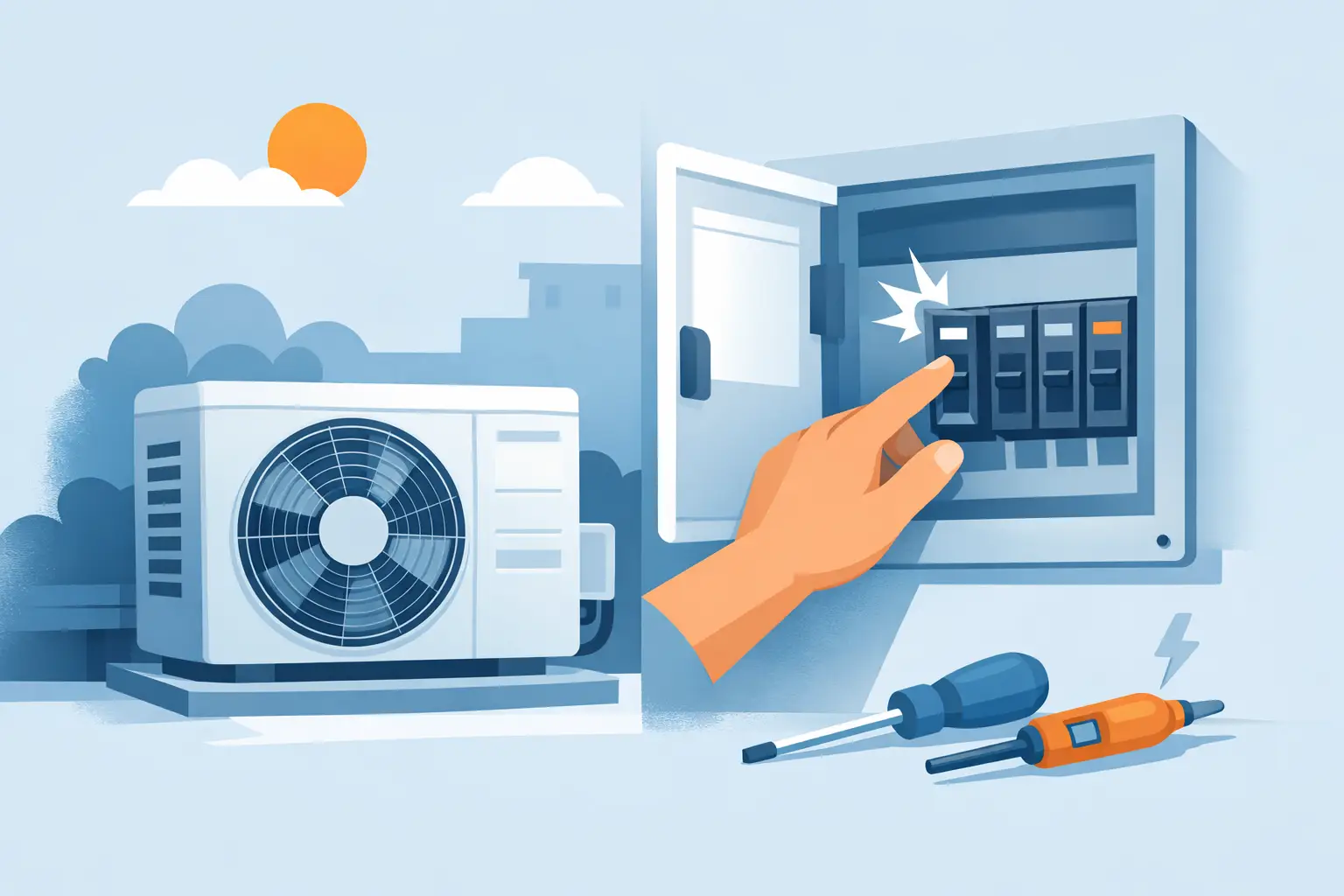
Start with the items that are safe and easy to verify. Replace a dirty filter, make sure all supply vents and return grilles are open and unblocked, and check that the thermostat settings are correct. Clear debris around the outdoor unit and make sure the disconnect has not been switched off accidentally.
If the indoor coil or refrigerant line is frozen, turn the thermostat to OFF and set the fan to ON if your thermostat allows it. This can help the ice thaw. Do not chip ice off the coil or pour hot water into the equipment. Once the system has thawed, the underlying airflow or refrigerant issue still needs to be found.
Avoid repeatedly turning the thermostat down to force longer cooling. Setting the temperature far below your preferred level will not cool the house faster. It may only cause the system to run longer after it starts and mask a problem that needs attention.
When to Call an HVAC Technician
Call for professional diagnosis when basic checks do not correct the problem, when short cycling happens more than once or twice in a day, or when your home is not staying cool. Service should be treated as urgent if you see ice, hear loud buzzing or grinding, smell burning, find water around the indoor equipment, or have a breaker that trips again after one reset.
For landlords and small commercial property managers, short cycling deserves a prompt response even if the building is still partially cooled. Equipment damage can escalate quickly during extreme heat, and a preventable outage can affect tenants, inventory, employees, or customers.
A qualified technician should inspect airflow, filter condition, thermostat operation, electrical readings, refrigerant pressures, coil condition, drain operation, and overall system sizing when needed. That complete approach separates a lasting repair from a temporary workaround.
Prevent Short Cycling Before Summer Peaks
Preventive maintenance is the most practical way to catch many short-cycling causes before they interrupt comfort. A seasonal service visit can identify dirty coils, weak capacitors, worn contacts, drainage issues, thermostat concerns, and declining system performance before the hottest weeks place maximum demand on the AC.
Homeowners can help between visits by changing filters regularly, keeping vents open, clearing the outdoor unit, and paying attention to changes in runtime or noise. If your AC has begun cycling differently than it did last season, it is worth addressing early rather than waiting for a full breakdown.
SMW Refrigeration & Heating has served local homeowners and property managers since 1964, with experienced service for AC problems that cannot wait. A properly diagnosed repair can protect your comfort, reduce wasted energy, and give your system a better chance of making it through the Arizona heat when you need it most.
Need HVAC Service?
Call SMW Refrigeration & Heating for expert service throughout Maricopa County.
Call (602) 992-1930Related service
AC repair & air conditioning service in Tempe →