24 Hour AC Repair When Arizona Heat Won’t Wait
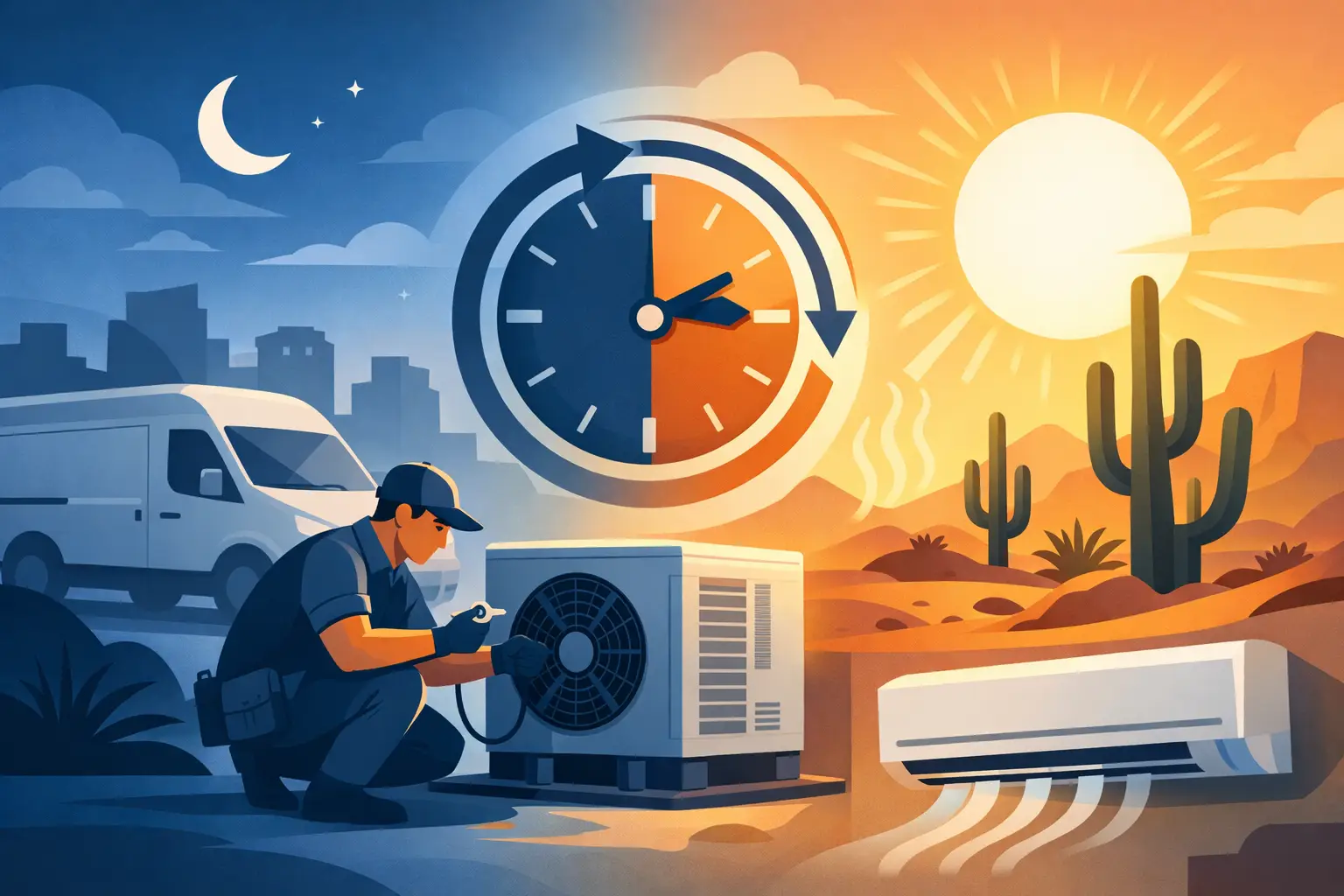
A failed air conditioner at 2 p.m. in Tempe is inconvenient. A failed system after hours, with indoor temperatures still climbing and family members, tenants, or customers inside, can become urgent fast. That is when 24 hour AC repair matters: not as a luxury, but as a practical response to an Arizona heat emergency.
The right next step depends on what the system is doing, who is in the building, and whether there are signs of an electrical or mechanical problem. Some issues can wait until morning. Others should be addressed as soon as possible to protect people, prevent more extensive equipment damage, and restore safe indoor conditions.
When to Call for 24 Hour AC Repair
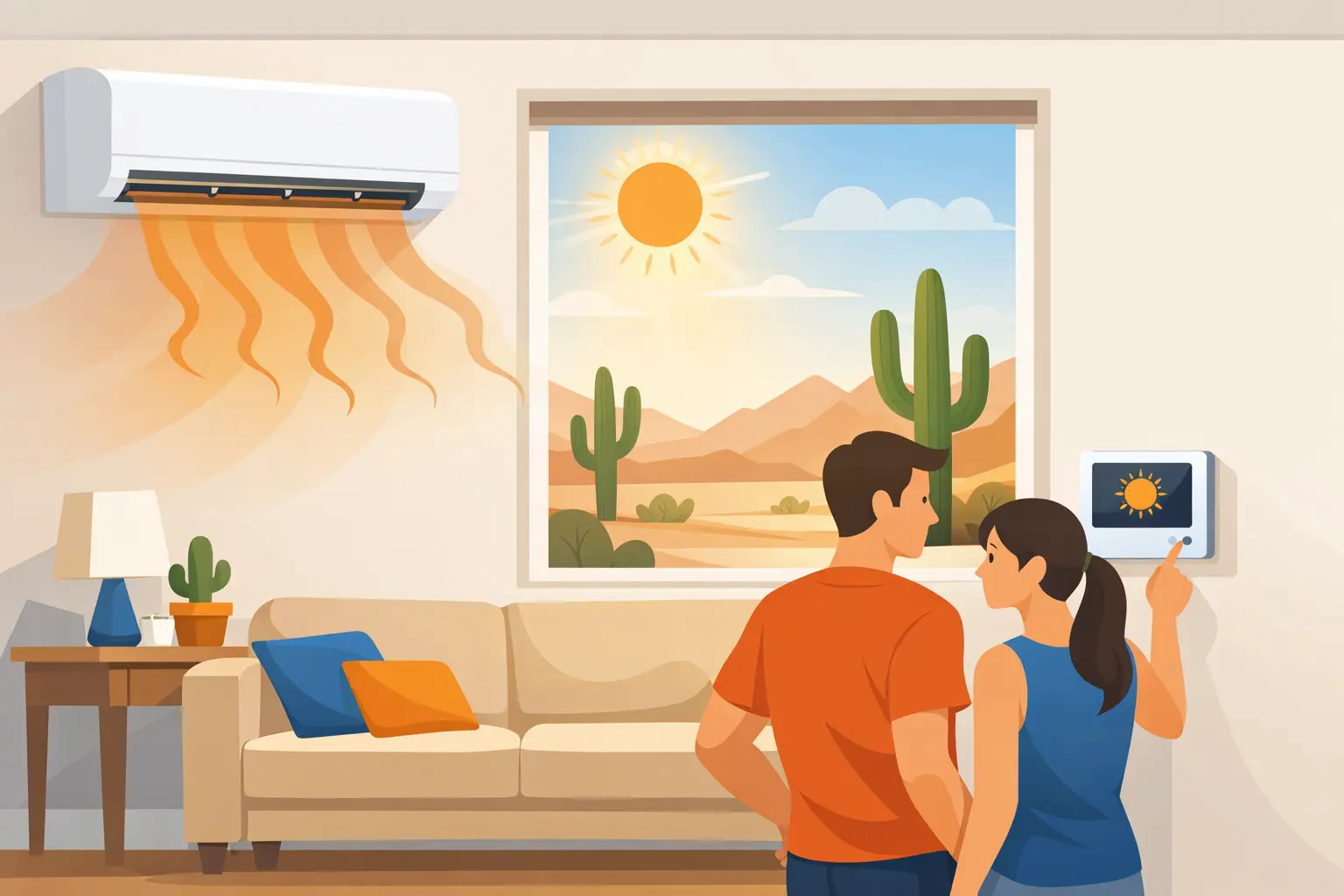
Air conditioners rarely stop working at a convenient time. A system may run but blow warm air, shut down without warning, leak water through a ceiling, or trip the breaker repeatedly. In Maricopa County, even an overnight failure can leave a home dangerously warm by the next day.
Emergency service is especially appropriate when cooling has stopped completely and the property is occupied. Households with infants, older adults, people with medical conditions, and pets should not wait through prolonged heat when indoor temperatures are rising. The same is true for landlords responsible for occupied rentals and small businesses that need to keep employees, customers, or temperature-sensitive equipment comfortable.
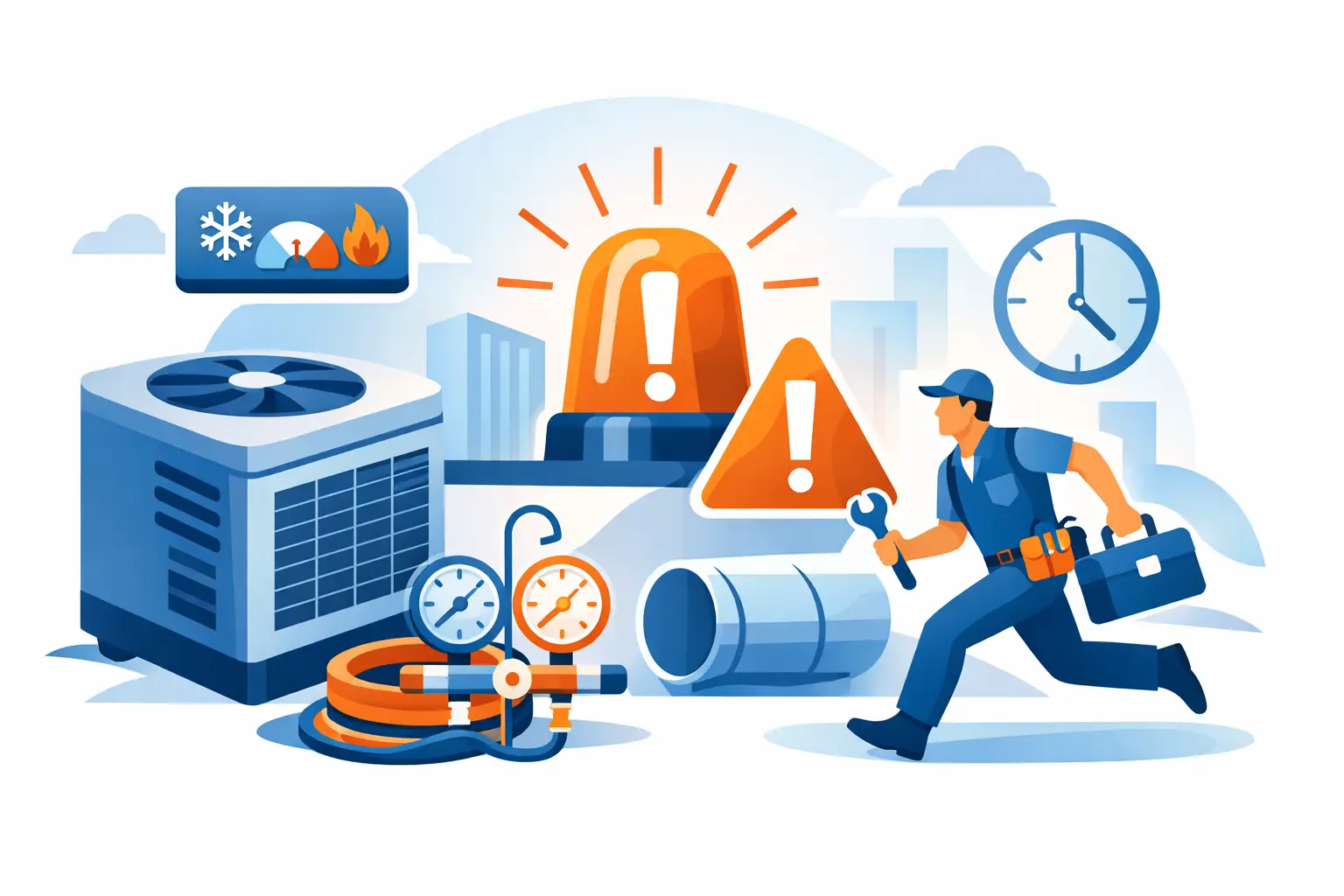
Call promptly if you notice burning odors, smoke, sparking, unusual buzzing, or a breaker that trips again after being reset once. Turn the system off at the thermostat if it is safe to do so. Electrical symptoms are not a do-it-yourself repair. Continuing to run the equipment can turn a smaller component failure into a larger repair.
Water around an indoor air handler also deserves attention. In Arizona, a clogged condensate drain can create a leak that damages drywall, flooring, insulation, or inventory. The AC may still be cooling, but the water damage will not pause until normal business hours.
What You Can Check Before Calling
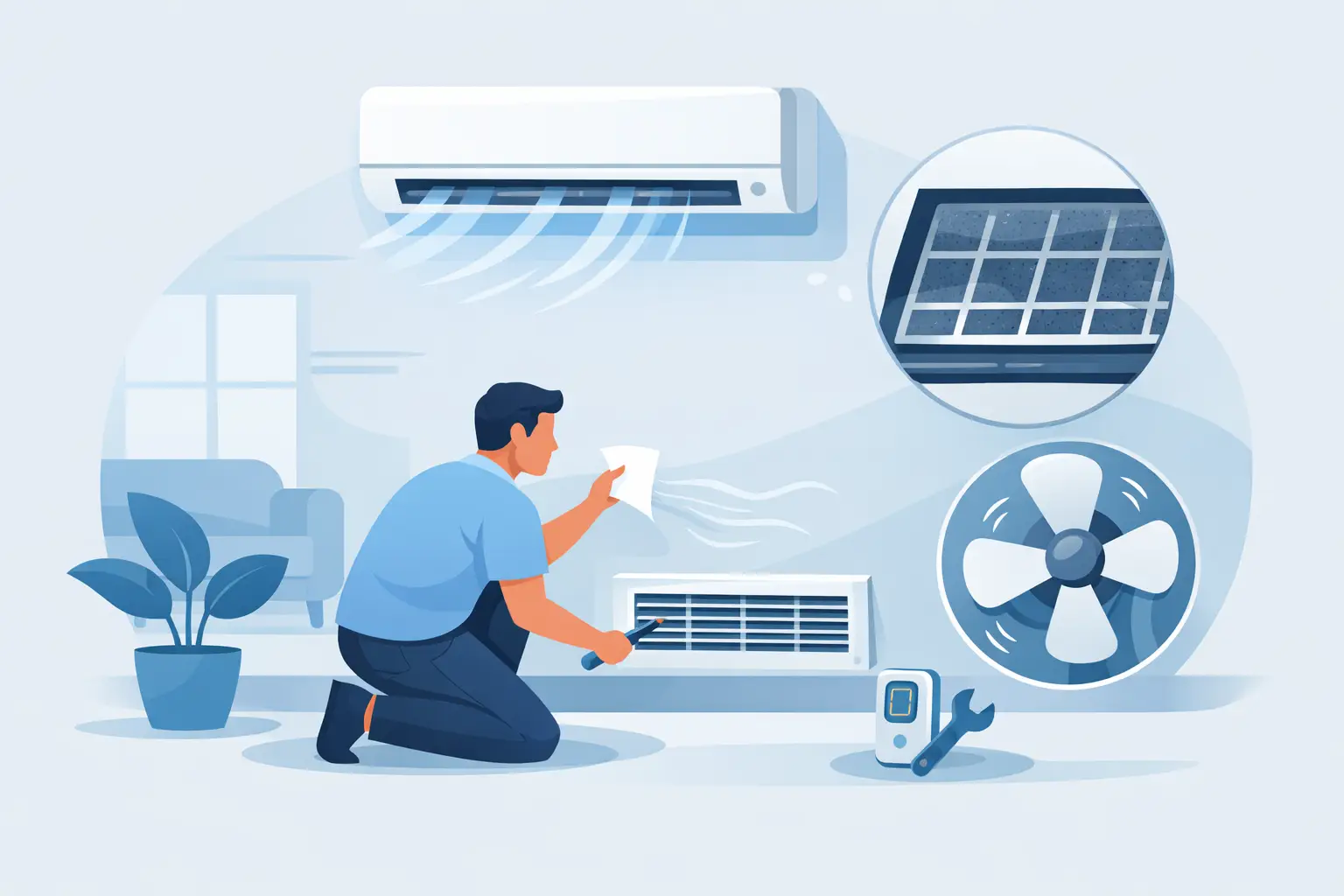
A few simple checks can eliminate avoidable delays, but they should not replace a professional diagnosis. Start at the thermostat. Confirm it is set to COOL, the temperature setting is below the room temperature, and the batteries are working if the thermostat uses them.
Next, inspect the return-air filter. A severely clogged filter restricts airflow and can cause the system to freeze or shut down. If you have a clean, correctly sized replacement, install it. Do not run the unit without a filter, and do not force a filter that does not fit.
Check the electrical panel for a tripped AC breaker. If it has tripped, reset it once. If it trips again, leave it off and request service. A repeatedly tripping breaker can point to an electrical issue, a failing motor, a compressor problem, or another condition that needs trained attention.
You can also look at the outdoor unit from a safe distance. Remove leaves, boxes, or other debris blocking airflow around it. Do not remove access panels, touch wiring, or attempt to clean internal components during a breakdown. Modern cooling systems contain electrical connections and refrigerant components that require proper equipment and licensing to service.
When you call, share what you observed: whether the unit is running, whether air is warm or weak, any sounds or odors, the thermostat setting, and whether the breaker has tripped. Those details help a technician arrive prepared.
What Happens During an Emergency AC Visit
A reliable emergency repair visit begins with diagnosis, not guesswork. The technician should inspect the thermostat operation, power supply, airflow, indoor and outdoor equipment, drain system, and key electrical components. Depending on the symptoms, they may test capacitors, contactors, motors, controls, refrigerant pressures, and compressor performance.
The goal is to identify the actual cause of the failure and explain the repair clearly. A weak capacitor, damaged contactor, blocked drain, failed blower motor, refrigerant leak, or compressor issue can all produce similar symptoms from inside the home. Replacing a part without confirming the underlying problem may get the system running briefly, but it does not always solve the reason it failed.
Some repairs can be completed during the same visit if the needed parts are available and the equipment is otherwise in serviceable condition. Other situations require a follow-up, particularly when an older system has a major component failure or parts must be ordered. A qualified technician should explain the immediate options, what can safely wait, and the likely cost considerations before work proceeds.
For property managers and small commercial owners, clear communication is part of the service. You need to know whether cooling can be restored that night, whether tenants need temporary accommodations, and whether the equipment is approaching replacement rather than another repair cycle.
Common AC Problems That Cannot Wait
Not every late-night service call involves a complete system replacement. Many urgent failures come from components that wear out under long Arizona cooling seasons. Capacitors and contactors, for example, work hard during frequent starts and stops. When they fail, the outdoor unit may hum, fail to start, or shut down unexpectedly.
Blower problems can be equally disruptive. If the indoor blower does not move air across the evaporator coil, the system may freeze, airflow may drop sharply, and rooms can become uncomfortable even while the outdoor unit appears to be running. Frozen equipment should be turned off rather than forced to continue operating.
Refrigerant issues require a more careful approach. Refrigerant does not simply get “used up.” If levels are low, there may be a leak that needs to be located and repaired. Adding refrigerant without addressing the source can lead to recurring cooling problems and unnecessary expense.
Drain line blockages are another frequent concern during humid periods and heavy system use. If a safety switch shuts the unit down because of standing water, it is doing its job. Bypassing that switch or ignoring the drain problem risks water damage around the air handler.
Repair or Replace? Make the Decision With the Full Picture
When an air conditioner fails after hours, the immediate priority is restoring cooling. Once the house or business is comfortable again, it may be time to discuss the condition of the system as a whole. An emergency repair does not automatically mean replacement is the best answer.
A newer system with a failed electrical component or drain issue is often a sensible repair. An older unit with repeated breakdowns, declining efficiency, expensive refrigerant-related repairs, or a failing compressor deserves a more detailed conversation. Repair cost matters, but so do the system’s age, maintenance history, energy use, available parts, and how reliably it can handle another Arizona summer.
There is no one-number rule that fits every property. A landlord may need dependable short-term cooling for current tenants while planning replacement between leases. A homeowner may choose repair if the equipment has several good years left. A small business may prioritize replacement sooner to avoid lost operating hours. The best decision is based on the building, the equipment, and the cost of another unexpected failure.
Reduce the Odds of an After-Hours Breakdown
Preventive maintenance cannot eliminate every failure, but it can catch many problems before they become an emergency call. A professional tune-up gives the technician an opportunity to inspect electrical connections, clean critical components, verify drainage, check airflow, and identify wear before the hottest stretch of the season.
Between service visits, change filters regularly and keep the outdoor unit clear of weeds, debris, and stored items. Pay attention to early warnings such as longer cooling cycles, uneven room temperatures, new noises, ice on refrigerant lines, or water near the indoor unit. These signs are easier and often less costly to address before the system stops on a weekend or holiday.
SMW Refrigeration & Heating has served local homeowners and businesses since 1964, with licensed, bonded, and insured technicians available when an AC problem cannot wait. A quick response is valuable, but careful diagnosis and accountable workmanship are what help restore confidence in your cooling system.
If your AC fails after hours, focus first on safety, keep the building as cool as possible, and avoid repeated attempts to restart a system that is tripping breakers or making alarming sounds. Prompt professional help can protect your comfort tonight and give you a clearer path for keeping the system dependable tomorrow.
Need HVAC Service?
Call SMW Refrigeration & Heating for expert service throughout Maricopa County.
Call (602) 992-1930Related service
AC repair & air conditioning service in Tempe →