Uneven Room Temperatures Causes and Fixes
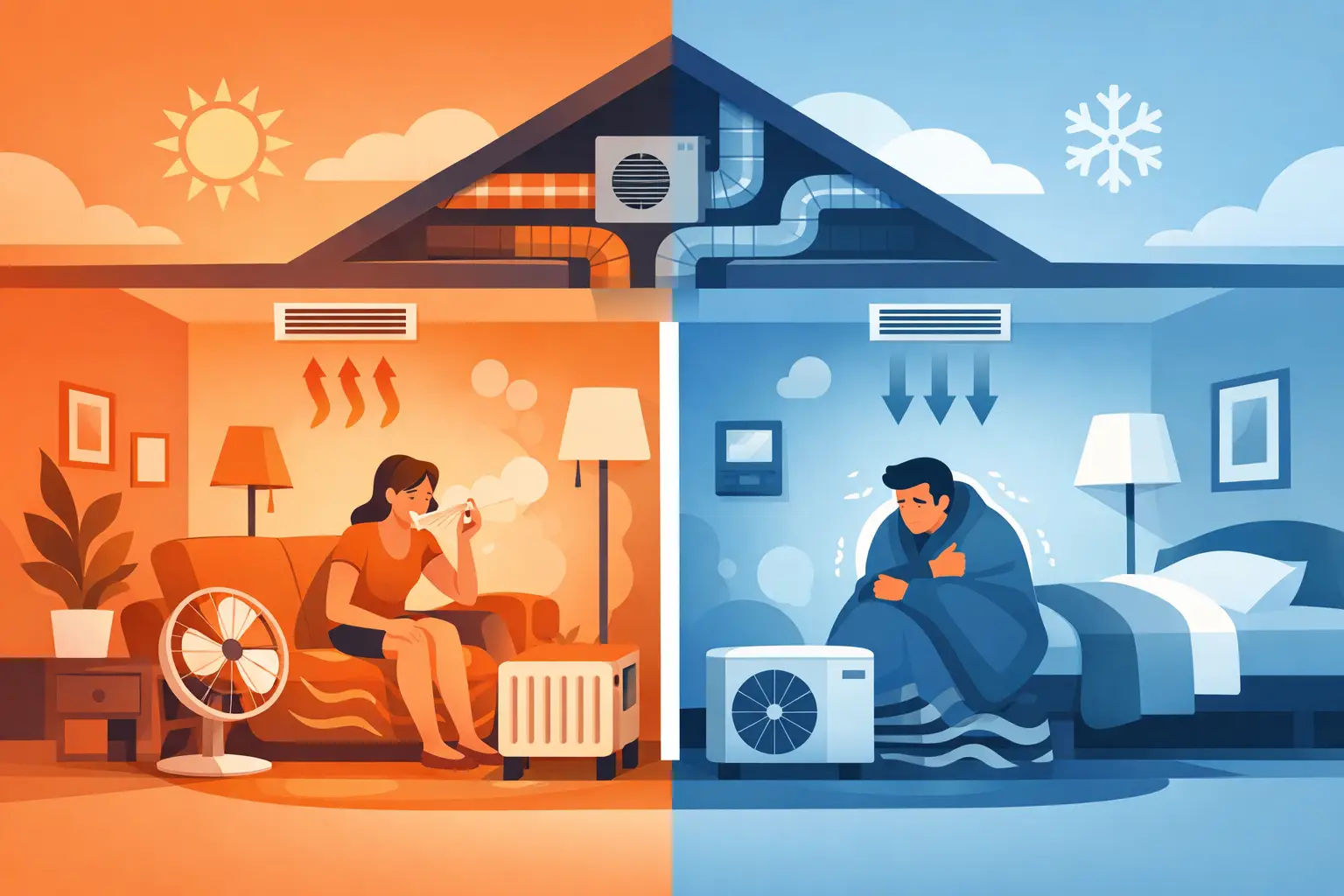
A bedroom that feels fine at sunrise can become unbearable by late afternoon, while the thermostat in the hallway insists the house is cool. In Arizona, uneven room temperatures causes are often tied to intense sun exposure, ductwork problems, airflow restrictions, or an HVAC system that is no longer matched to the home.
A few degrees of difference between rooms can be normal. A persistent 5- to 10-degree gap, rooms that never reach the thermostat setting, or a second floor that stays hot all summer deserves a closer look. The right repair depends on the reason behind the imbalance, not just the room that feels uncomfortable.
Common Uneven Room Temperatures Causes
Direct sun and inadequate insulation
Tempe homes take a lot of heat through roofs, exterior walls, windows, and garage-adjacent rooms. West-facing bedrooms and rooms over a garage commonly run warmer because they receive more solar heat than the rest of the house. If attic insulation is thin, damaged, or unevenly installed, that heat transfers indoors faster and forces the air conditioner to work harder.
Windows can add to the problem, especially older single-pane glass or windows with worn weatherstripping. Closing blinds during peak sun, using appropriate window coverings, and sealing obvious gaps may help, but those steps cannot fully offset poor insulation or an undersized cooling system.
Restricted airflow from vents, filters, or equipment
Your HVAC system cannot cool a room effectively if conditioned air cannot get there. A clogged air filter is one of the simplest and most common causes of weak airflow. It can reduce air moving through the system, raise operating costs, and put unnecessary strain on the blower and other components.
Closed supply vents are another issue. It may seem practical to close vents in unused rooms, but most residential systems are designed to move a specific amount of air. Closing multiple vents can increase duct pressure and reduce comfort elsewhere. Furniture, rugs, or curtains covering supply registers can have a similar effect.
Return air matters as much as supply air. Air delivered to a closed bedroom needs a path back to the return side of the system. A room with a shut door and no dedicated return can become pressurized, limiting the amount of cool air that enters. This is why some bedrooms feel better with the door open.
Leaky, disconnected, or poorly designed ductwork
Ductwork often runs through a hot attic, where summer temperatures can climb far above the outdoor reading. A loose connection, torn flex duct, crushed section, or failed seal can send cooled air into the attic instead of into the room. Even a small duct leak can make a noticeable difference in a distant bedroom.
Duct design also matters. Long duct runs, sharp turns, branches that are too small, and unbalanced airflow can leave some rooms starved for conditioned air. This is particularly common after additions, remodels, or changes to the layout of a home. A room may have been added without updating the system capacity or duct distribution needed to serve it.
Duct repairs and balancing should be based on an inspection and airflow measurements. Simply increasing fan speed or replacing registers may not solve the underlying problem, and it can create more noise or pressure issues.
An HVAC system that is improperly sized
Bigger is not always better in air conditioning. An oversized unit can cool the thermostat area quickly and shut off before air reaches the farthest rooms. Frequent short cycles also reduce dehumidification, although humidity is less of a concern in the Valley than in many parts of the country.
An undersized system has the opposite problem. It may run for long periods during extreme heat and still struggle to maintain temperatures in rooms with heavier heat gain. Age, declining efficiency, poor maintenance, insulation changes, and additions to the home can all make a once-adequate system feel undersized.
Proper sizing requires more than comparing the home to a square-footage chart. A qualified technician should consider insulation levels, window orientation, ceiling height, occupancy, ductwork, and the local climate. That evaluation is especially valuable before replacing an older system.
Thermostat location and control problems
The thermostat controls the system based on the temperature where it is installed, not the temperature in every room. A thermostat in a shaded hallway may reach its setting while a sunny room is still several degrees warmer. A thermostat near a kitchen, exterior door, supply vent, or heat-producing electronics can also give misleading readings.
Sometimes the issue is the thermostat itself. Incorrect programming, a weak battery, poor calibration, or a communication problem with a smart thermostat can affect system operation. Before assuming the air conditioner has failed, verify the thermostat setting, mode, fan setting, and schedule.
A remote sensor may help in homes where one frequently used room is consistently uncomfortable. However, changing the thermostat's sensing location can make other areas warmer or cooler. It is a useful option when paired with a broader assessment of airflow and heat gain.
Dirty coils and mechanical problems
A neglected air conditioner may still run but deliver less cooling than it should. A dirty outdoor condenser coil makes it harder for the unit to release heat. A dirty indoor evaporator coil, blower issue, low refrigerant charge, failing capacitor, or other mechanical problem can reduce airflow or cooling capacity.
These problems usually come with other signs: longer run times, warm air from vents, unusual sounds, higher electric bills, ice on refrigerant lines, or repeated cycling. Refrigerant is not a fuel that should need routine refilling. If a system is low, a technician should identify and repair the leak rather than simply add refrigerant.
What You Can Check Before Scheduling Service
Start with the items that are safe and easy to inspect. Replace a dirty filter with the correct size and type, make sure supply vents are open and unobstructed, and confirm that return grilles are not blocked by furniture. Check whether the uncomfortable room changes when its door is open, which can point to a return-air issue.
Look for obvious gaps around windows and exterior doors, and note whether the room is above a garage, below the attic, or exposed to afternoon sun. These details help identify whether heat gain is the main issue. If you can safely see accessible ductwork in the attic, watch for disconnected sections or visibly crushed flex ducts, but avoid stepping between attic joists or attempting repairs around electrical equipment.
Do not close most of the home's vents to force more air into one warm room. Do not remove system panels or try to handle refrigerant components. Those actions can damage equipment, create safety concerns, and make an accurate diagnosis harder.
When Uneven Temperatures Need Professional Attention
Call for HVAC service if one or more rooms stay uncomfortable despite a clean filter and open vents, if airflow is weak throughout the home, or if the system cannot keep up during normal operation. A technician can inspect the equipment, test temperature differences, evaluate static pressure, check ducts, and determine whether the issue is maintenance, a repair, airflow balancing, insulation, or system sizing.
For landlords and small commercial property owners, addressing these concerns early can prevent tenant complaints from becoming emergency calls. In retail spaces, offices, and smaller commercial buildings, uneven temperatures may also affect customer comfort, employee productivity, and equipment reliability.
SMW Refrigeration & Heating has served Tempe and Maricopa County since 1964 with dependable heating and cooling repair, maintenance, and replacement service. For persistent comfort problems or a system that is struggling in Arizona heat, a professional inspection can identify the cause before it turns into a complete breakdown.
The most useful next step is to pay attention to the pattern: which room is affected, what time of day it worsens, whether doors change the airflow, and how long the system runs. Those details give a technician a stronger starting point and help move your home closer to the even, reliable comfort it should have.
Need HVAC Service?
Call SMW Refrigeration & Heating for expert service throughout Maricopa County.
Call (602) 992-1930Related service
Ductwork & duct sealing services →