7 Signs of a Failing Capacitor in Your AC
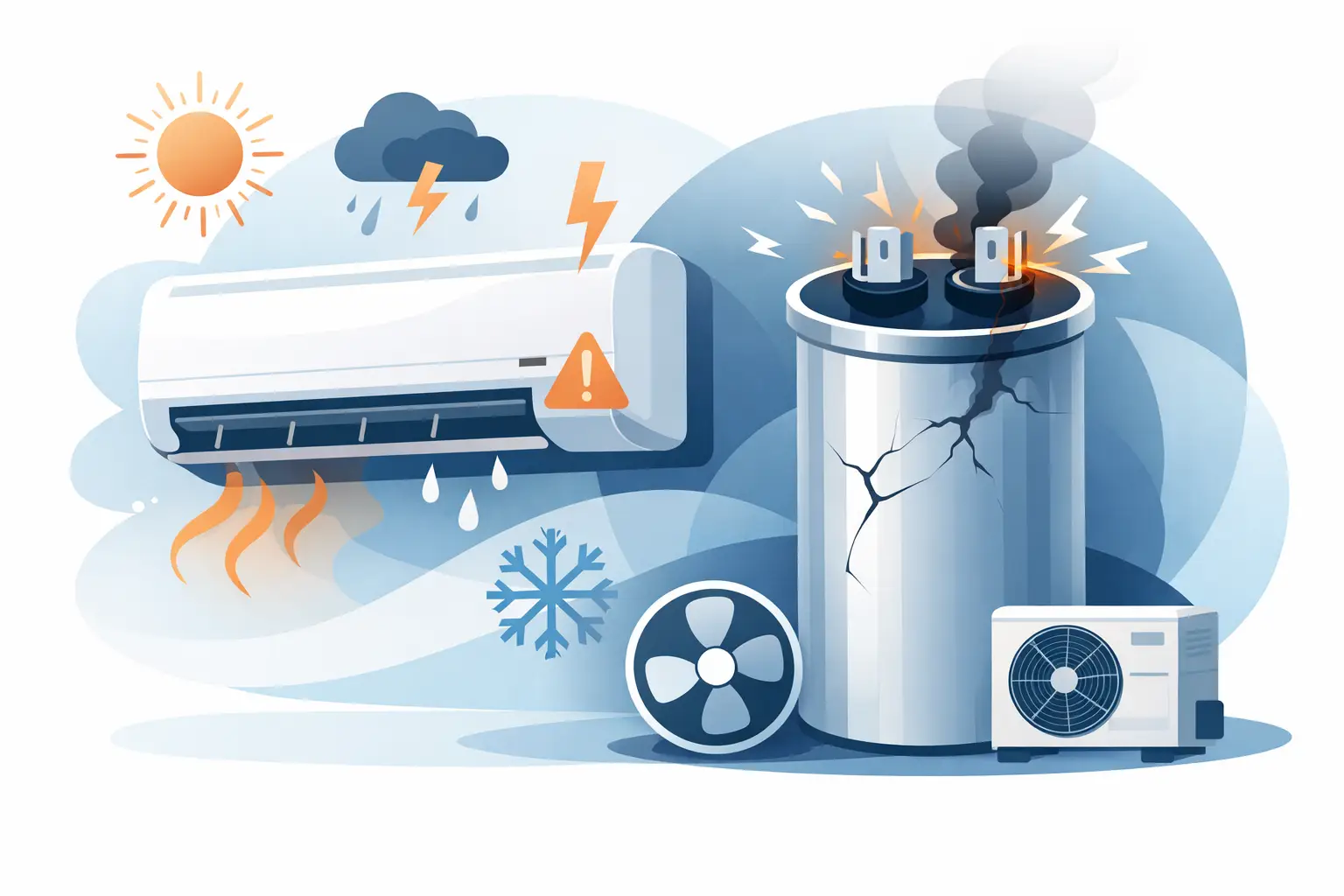
Your air conditioner may still blow some air even when a key electrical component is close to failing. That is why knowing the signs of failing capacitor can help Tempe homeowners and property managers act before a minor repair turns into a no-cooling emergency during an Arizona heat wave.
A capacitor is a small but essential part inside your outdoor AC unit or indoor air handler. It stores and releases electrical energy to help the compressor, condenser fan motor, and blower motor start and run properly. When it weakens, the system has to work harder. When it fails completely, the AC may stop cooling altogether.
7 Signs of a Failing Capacitor in Your AC
1. Your AC is humming but will not start
A repeated humming sound from the outdoor unit is one of the more recognizable warning signs. The system is receiving a call for cooling, but the compressor or fan motor may not have enough electrical boost to start.
Do not keep cycling the thermostat on and off to force the unit to run. A motor that cannot start can overheat, and repeated attempts may lead to more expensive damage. Turn the system off and arrange for a qualified HVAC technician to inspect it.
2. The outdoor fan starts slowly or does not spin
The condenser fan moves heat out of your home. If the fan blades start unusually slowly, stop shortly after starting, or remain still while the unit hums, a weak capacitor is one possible cause.
This symptom can also point to a failing fan motor, damaged wiring, a contactor problem, or a control issue. That is why the capacitor should be tested rather than replaced based on symptoms alone. A proper diagnosis protects you from paying for the wrong repair.
3. Your home is not cooling as it should
Weak cooling does not always mean a capacitor is at fault. Dirty coils, a clogged filter, low refrigerant, duct leaks, and thermostat problems can all reduce comfort. Still, a failing capacitor can prevent the compressor or fan from operating at full capacity, leaving your home warmer than the thermostat setting.
You may notice this first in the afternoon, when the system is under the greatest demand. In Maricopa County, an AC that is only slightly underperforming in the morning can struggle badly once outdoor temperatures climb.
4. The system turns off before it finishes a cooling cycle
Short cycling occurs when an air conditioner starts, runs briefly, and shuts off before reaching the desired indoor temperature. A deteriorating capacitor can contribute because motors may draw excessive power or overheat while trying to operate.
Short cycling puts extra strain on the compressor, which is one of the costliest parts of an air conditioning system. It also wastes energy and leaves indoor temperatures inconsistent. If you hear frequent starts and stops, it is worth scheduling service promptly.
5. You hear clicking, buzzing, or unusual electrical sounds
A single click when your system starts or stops can be normal. Persistent clicking, loud buzzing, or a hum that continues without the fan running is not something to ignore.
Electrical noises may come from a weak capacitor, relay, contactor, loose connection, or other component. Because AC equipment uses high voltage even after power has been shut off, avoid opening the electrical panel to investigate. The safest next step is to turn off the AC at the thermostat and call a licensed HVAC professional.
6. Your energy bills rise without a clear reason
A capacitor that is losing strength can make motors less efficient. The system may take longer to cool the building, run more often, or struggle through normal cycles. Those longer run times can show up on your electric bill.
A higher bill alone does not confirm capacitor failure. Seasonal temperatures, insulation issues, maintenance needs, and aging equipment all affect energy use. But when a cost increase appears alongside poor cooling, unusual sounds, or intermittent operation, an inspection is a sensible move.
7. The AC works intermittently
Some capacitors do not fail all at once. Your air conditioner may cool normally one day, then fail to start the next. It may come on after several attempts or shut down during the hottest part of the afternoon.
Intermittent cooling is especially frustrating for rental properties and small businesses, where a brief equipment failure can quickly become a tenant or customer comfort issue. Treat unreliable operation as an early warning, not an inconvenience that will solve itself.
Why Capacitors Fail So Often in Arizona
Capacitors are wear items. Their performance declines over time, particularly in equipment that runs hard for long periods. Arizona heat places serious demand on AC systems, and the outdoor electrical components are exposed to high ambient temperatures throughout much of the year.
Age is a common factor, but it is not the only one. Power fluctuations, poor airflow, dirty condenser coils, loose electrical connections, and an overworked motor can all shorten capacitor life. An undersized or aging AC system may also run almost continuously in summer, increasing strain on every electrical component.
Heat alone does not prove that the capacitor has failed. However, in a Tempe summer, a system that begins humming, short cycling, or losing cooling capacity deserves fast attention. Waiting can leave you without air conditioning when you need it most.
What to Do When You Notice These Warning Signs
Start by checking the basics that are safe for a homeowner or property manager to handle. Make sure the thermostat is set to cool and has fresh batteries if applicable. Check that the air filter is not severely clogged. Confirm that the circuit breaker has not tripped.
If the outdoor unit is humming, the fan is not moving, or the system keeps shutting down, turn the AC off. Do not try to start the fan with a stick or screwdriver, and do not attempt to replace the capacitor yourself. Capacitors can retain a dangerous electrical charge, even after power is disconnected.
A technician can safely test the capacitor's microfarad rating, inspect the motor and wiring, and determine whether the issue is limited to that part. In many cases, capacitor replacement is a straightforward repair. But if the failed capacitor was caused by an overheating motor, damaged contactor, or electrical problem, those underlying issues need attention as well.
Can a Bad Capacitor Damage Your Air Conditioner?
It can. The longer a weak capacitor is allowed to strain a compressor or fan motor, the greater the chance of related damage. A fan motor that cannot start may overheat. A compressor that repeatedly attempts to start can suffer significant wear.
That does not mean every capacitor issue becomes a major repair. Many are caught and corrected before additional components fail. The difference often comes down to timing. Calling when you first notice the signs is usually less disruptive than waiting for a complete breakdown.
Repair, Replacement, or a Larger AC Decision?
For a newer, otherwise well-maintained system, replacing a failed capacitor is generally a practical repair. The technician should verify that the new part matches the equipment specifications and that no other electrical or mechanical issue caused the failure.
For an older unit with frequent service calls, poor cooling, or several worn components, the conversation may be broader. A capacitor repair can still restore operation, but it may not change the long-term condition of an aging system. The right decision depends on the unit's age, repair history, energy performance, and the condition of the compressor and motors.
Preventive maintenance helps catch weak electrical components before they stop your system on a hot day. During a professional tune-up, technicians can inspect capacitors, electrical connections, motors, coils, drains, and overall system performance.
If your AC is showing any of these warning signs, do not wait for the next triple-digit afternoon to find out whether it will restart. SMW Refrigeration & Heating has served Tempe and Maricopa County since 1964, with dependable repair support when comfort cannot wait.
Need HVAC Service?
Call SMW Refrigeration & Heating for expert service throughout Maricopa County.
Call (602) 992-1930Related service
AC repair & air conditioning service in Tempe →