AC Maintenance Tempe Homeowners Can Count On
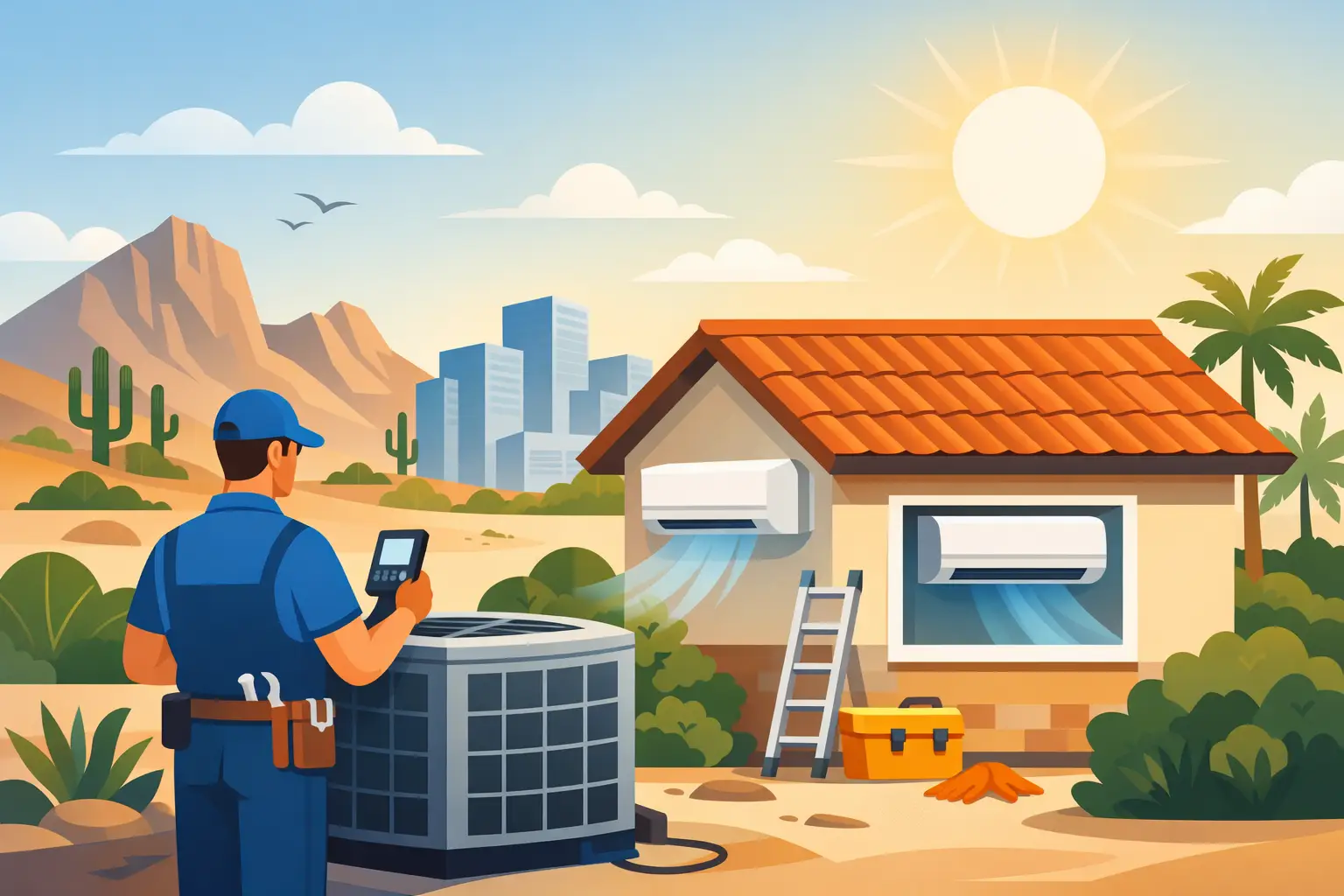
A Tempe air conditioner can appear to be working normally right up until a 110-degree afternoon exposes a problem. A clogged drain, worn electrical part, dirty coil, or low airflow may not stop cooling during a mild morning. Under sustained Arizona heat, those small issues can turn into a no-cooling call. Regular ac maintenance Tempe homeowners and property managers schedule before peak season is one of the most practical ways to reduce that risk.
Preventive service is not a promise that an older system will never fail. It is a chance to find developing problems, keep the equipment operating within safer limits, and make informed decisions before comfort, tenants, or business operations are affected.
Why AC Maintenance Matters So Much in Tempe
Air conditioning systems in Maricopa County work harder and longer than systems in many other parts of the country. Long cooling seasons put more run time on motors, capacitors, contactors, compressors, and blower components. Dust can restrict airflow, and high temperatures make it harder for a system to recover when maintenance has been postponed.
When airflow drops, your AC may run longer to meet the thermostat setting. That can raise energy use while putting extra strain on critical components. A dirty outdoor coil can create a similar problem by limiting the unit's ability to release heat. Neither issue necessarily causes an immediate shutdown, but both can shorten the margin between normal operation and a costly repair.
Maintenance also matters for indoor comfort. A system that cools unevenly, cycles too often, or produces weak airflow may have a mechanical concern, but it can also point to a filter issue, duct problem, thermostat setting, or drainage restriction. A professional inspection helps separate a simple correction from a repair that needs attention.
What a Professional AC Maintenance Visit Should Include
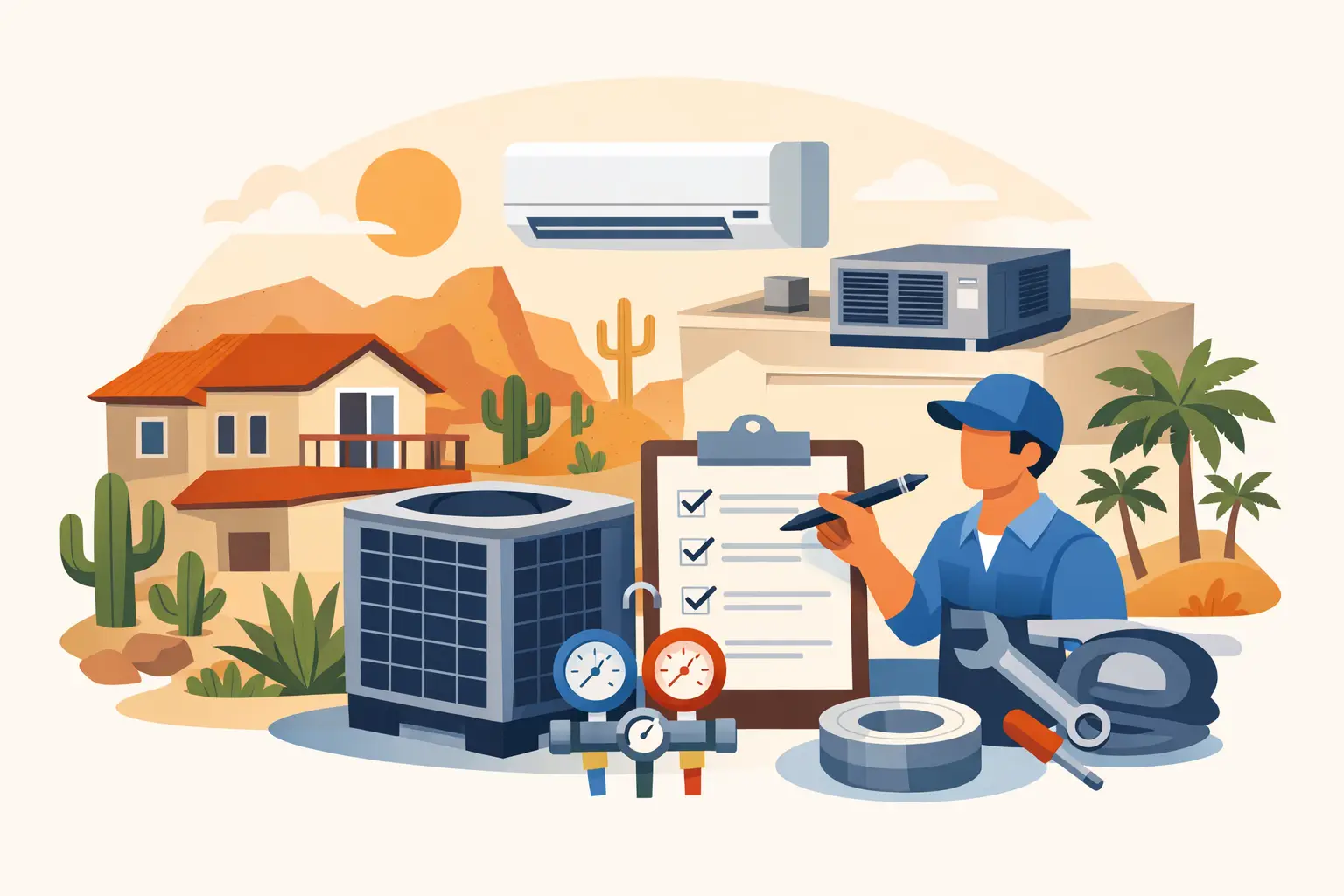
A worthwhile maintenance appointment goes beyond changing an air filter. The exact service depends on the system's condition, age, and equipment type, but a technician should inspect the parts that affect performance, safety, and reliability.
Airflow, filtration, and indoor components
The technician may check the filter, blower operation, accessible indoor coil condition, and airflow. Filters are a homeowner's first line of defense, but they are often overlooked or replaced with a filter that is too restrictive for the system. A technician can help identify an appropriate filter type and replacement schedule for the home, pets, occupants, and equipment.
The condensate drain also deserves attention. In humid periods, the drain removes moisture collected during cooling. A blockage can lead to water around the air handler, ceiling damage in some installations, or a safety switch that shuts the system down. Clearing or treating the drain when needed is a small service item with meaningful consequences.
Outdoor unit and electrical inspection
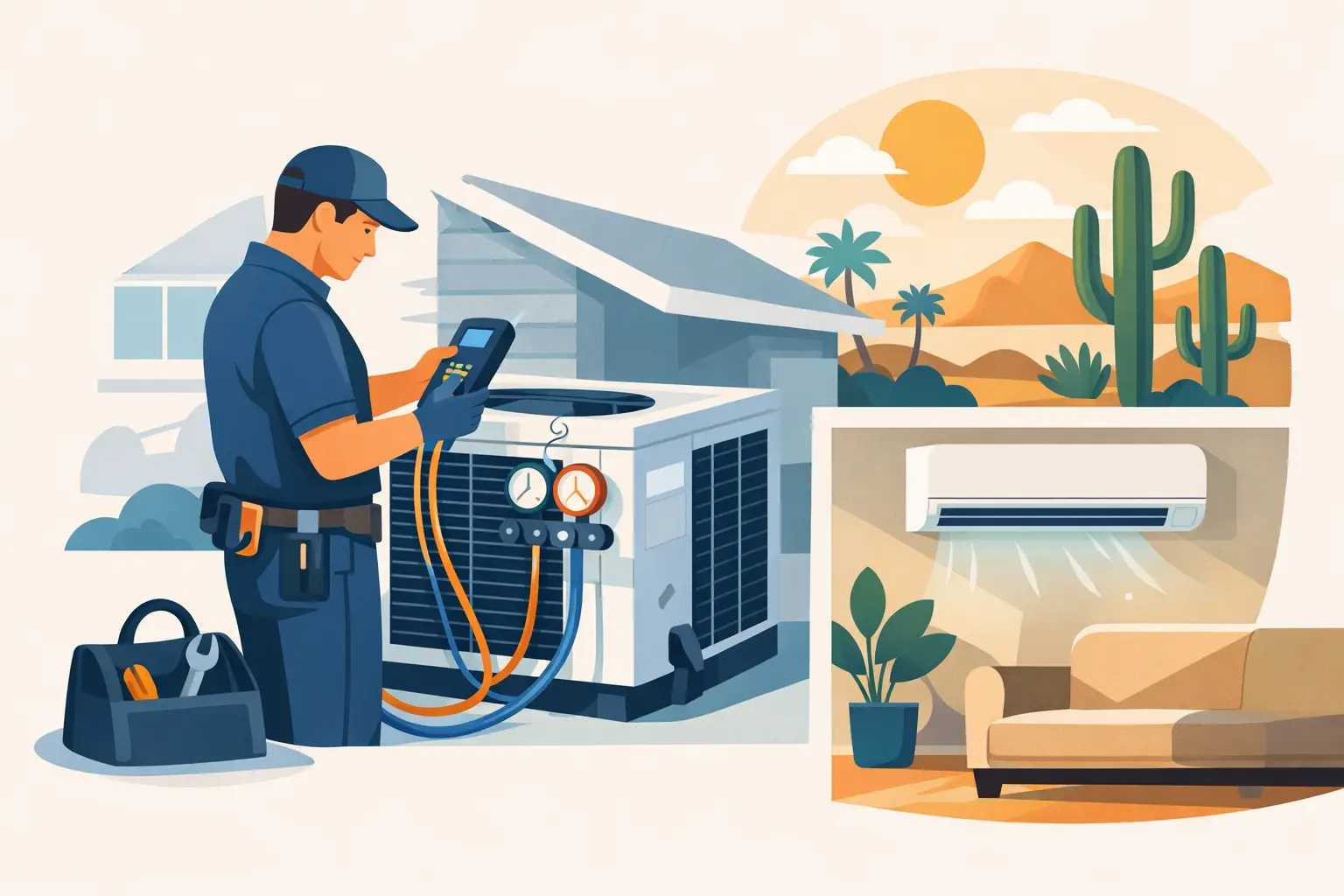
The outdoor condenser needs open space and clean airflow to reject heat. During maintenance, a technician can inspect the coil, fan, cabinet, disconnect, wiring, and electrical connections. Electrical components naturally wear with repeated high-demand cycles. A weak capacitor or worn contactor may be identified before it leaves the system unable to start.
Technicians can also measure operating conditions and assess whether the equipment is performing as expected. Refrigerant is not a routine top-off item. A properly installed AC system should not consume refrigerant. If a low charge is suspected, the correct approach is to diagnose the cause rather than simply add refrigerant and move on.
Thermostat and overall system operation
A maintenance visit should include a run test to verify cooling operation, temperature response, and cycling. This is also a good time to discuss concerns that may not show up during a brief inspection, such as a bedroom that stays warm, unusual sounds, high utility bills, or a system that runs late into the night.
When to Schedule AC Maintenance in Tempe
For most homes, spring is the best time to schedule service. The weather is usually warm enough to test cooling properly, and an inspection before summer provides time to address repairs without waiting for an emergency. Early scheduling can also make it easier to secure an appointment before the first major heat wave.
That said, any time is better than skipping maintenance entirely. If you just moved into a home, manage a rental property, or do not know when the equipment was last serviced, schedule an inspection as soon as practical. For older equipment, high-use households, and light commercial systems, more frequent attention may make sense.
Property managers should plan ahead rather than waiting for tenant complaints. Documented seasonal maintenance can help reduce avoidable disruptions, identify aging systems across a portfolio, and support better budgeting for repairs or replacement.
Signs You Should Not Wait for a Routine Visit
Maintenance is preventive, but some symptoms call for prompt service. Waiting through a Tempe summer can turn a manageable repair into a complete breakdown. Contact an HVAC professional if you notice:
- Warm air coming from supply vents while the thermostat is set to cool.
- Weak airflow, frequent cycling, or rooms that no longer cool evenly.
- Water near the indoor unit or signs of a drain backup.
- Grinding, buzzing, rattling, or repeated clicking from the equipment.
- Ice on refrigerant lines or the indoor coil.
- A sudden increase in electricity use without a clear change in household demand.
If the system stops cooling entirely during extreme heat, focus first on safety. Move family members, pets, or vulnerable occupants to a cooler location if necessary, check that the thermostat and breakers are set correctly, and avoid repeatedly resetting equipment that will not start. Repeated attempts can add stress to an already failing component.
What Homeowners Can Do Between Service Visits
Professional maintenance handles the technical work, but a few consistent habits help protect the system between appointments. Replace or inspect the air filter on a regular schedule. During heavy use, many homes benefit from monthly checks, although the right interval depends on the filter, pets, dust, and household conditions.
Keep the outdoor unit clear of leaves, weeds, stored items, and yard debris. Do not cover it while it is operating, and avoid directing landscape irrigation at the cabinet. Inside, keep supply vents open and unobstructed by furniture or rugs. Closing off multiple vents does not reliably save energy and can disrupt the airflow the system was designed to handle.
Pay attention to changes instead of waiting for a full failure. A new sound, a musty odor, longer cooling cycles, or a hot room can provide useful clues. Sharing those observations with the technician often makes diagnosis more efficient.
Maintenance, Repair, or Replacement: How to Decide
An inspection may reveal that your system needs a simple repair, not replacement. In many cases, repairing a well-maintained unit is the sensible choice. The decision becomes more complicated when the equipment is older, has recurring failures, uses outdated refrigerant, or requires a major component repair.
There is no single age at which every AC should be replaced. Consider repair history, cooling performance, utility costs, the condition of the ductwork, and the size of the proposed repair. A newer system with one failed part may be a straightforward repair. An aging system with repeated summer breakdowns may justify a replacement conversation, especially if reliability matters for young children, older adults, tenants, inventory, or business operations.
A dependable contractor should explain the findings clearly, provide realistic options, and let you weigh the trade-offs. The goal is not to replace equipment before it is necessary. It is to avoid being forced into a rushed decision on the hottest day of the year.
Choose Local Service Built for Arizona Heat
AC maintenance is most valuable when it is performed consistently by technicians who understand how Arizona conditions affect equipment. Look for a licensed, bonded, and insured HVAC company that can service your system, explain its condition without pressure, and respond when a repair cannot wait.
SMW Refrigeration & Heating has served local homeowners and businesses since 1964, with maintenance, repair, installation, and 24/7 emergency support across Tempe and Maricopa County. The best time to address an AC concern is when your home is still cool, your options are clear, and summer has not yet made the decision for you.
Need HVAC Service?
Call SMW Refrigeration & Heating for expert service throughout Maricopa County.
Call (602) 992-1930Related service
AC repair & air conditioning service in Tempe →