HVAC Service Contracts for Arizona Homes

A cooling system that quits in late July is more than an inconvenience in Tempe. It can disrupt sleep, put tenants in a difficult position, interrupt business operations, and turn a manageable repair into an urgent expense. HVAC service contracts give homeowners, landlords, and small commercial property managers a practical way to stay ahead of those problems through scheduled professional maintenance.
The right agreement is not a promise that equipment will never fail. Air conditioners, heat pumps, furnaces, and duct systems all have parts that wear out. What a service contract can do is make maintenance consistent, identify developing concerns earlier, and establish a relationship with a contractor that already knows your equipment and property.
What HVAC Service Contracts Usually Include
An HVAC service contract is an ongoing maintenance agreement between a customer and an HVAC company. Its purpose is preventive care, not a replacement for major repairs, new equipment, or emergency service. The exact details vary by provider, so the written terms matter.
Most agreements include one or more scheduled visits each year. In Maricopa County, two visits are often sensible: one before the cooling season puts maximum demand on the system and another before heating season. Arizona homes depend heavily on AC for much of the year, and a system can accumulate substantial runtime before a homeowner notices that efficiency or performance has slipped.
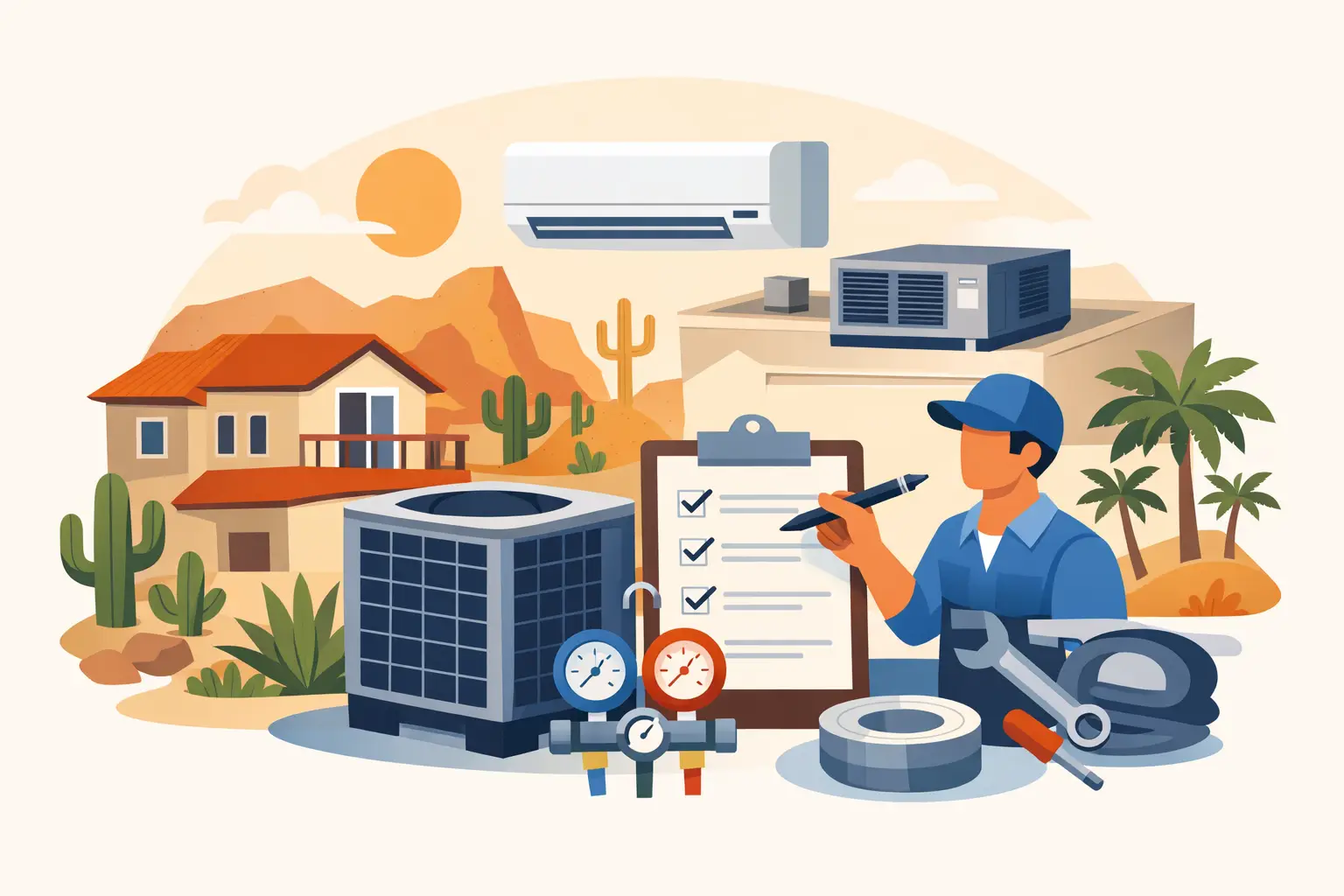
During a maintenance visit, a qualified technician may inspect electrical connections, check refrigerant performance, test safety controls, examine motors and moving components, inspect the condensate drain, evaluate thermostat operation, and look for signs of wear. The technician should also assess airflow and the condition of accessible components. A good appointment is not simply changing a filter and leaving.
Many HVAC service contracts also provide priority scheduling, discounted repair rates, or reduced diagnostic fees. These benefits can be valuable during a heat wave, when service demand rises and a fast response matters. Still, priority service does not always mean immediate service, and customers should ask how the company defines it.
Why Preventive Maintenance Matters in Arizona
Arizona cooling systems work in demanding conditions. Long periods of high outdoor temperatures, dust, monsoon humidity, and frequent cycling place stress on components that may get relatively light use in milder climates. A small issue can become more serious when the unit has to run day after day to hold indoor temperature.
Dirty coils, clogged drains, worn electrical parts, restricted airflow, and thermostat issues can all affect system operation. Some problems lead to higher utility bills or uneven temperatures before they cause a complete shutdown. Others may not be visible to the property owner at all until the system stops cooling.
Regular maintenance gives a technician the chance to spot warning signs when there is still time to plan. For a homeowner, that may mean scheduling a repair before an important family event or before the hottest part of summer. For a landlord, it may mean avoiding an after-hours tenant call. For a small business, it can help protect customer comfort, employee working conditions, and equipment that depends on stable indoor temperatures.
Maintenance also supports system life, but it should be viewed realistically. Service cannot reverse the age of an older unit or guarantee that a compressor, blower motor, or other major component will not fail. It can help keep the system operating as intended and provide clearer information about when repair costs no longer make financial sense.
What Is Usually Not Covered
This is where customers should slow down and read the details. A maintenance contract and a repair warranty are not the same thing. Even when an agreement includes discounts, replacement parts, refrigerant, labor for major repairs, and new system installation are often billed separately.
Some plans exclude damage caused by neglected filter changes, pest activity, power events, inaccessible equipment, or pre-existing conditions. Others may set limits on after-hours benefits or require regular enrollment before discounts apply. None of those terms are automatically unreasonable, but they should be clear before you sign.
Ask whether the agreement covers both heating and cooling equipment, whether there is a fee for each maintenance visit, and whether the plan renews automatically. If you manage rental homes or a small commercial property, confirm whether every system is included and whether multiple units receive the same scheduling priority.
A trustworthy contractor should explain the difference between included maintenance and recommended repairs without pressure. You should receive straightforward information about what was inspected, what was found, and what action is recommended now versus what can be monitored.
Who Benefits Most From a Service Agreement?
HVAC service contracts are often a strong fit for homeowners who want a predictable maintenance routine but do not want to remember every seasonal task. They are especially helpful for homes with aging equipment, systems that have needed repairs in the past, or households where reliable cooling is a high priority.
Landlords benefit because planned visits can reduce surprises and create service records for each property. That does not eliminate tenant maintenance responsibilities, such as keeping filters changed when applicable, but it gives the owner a dependable schedule for professional inspection. It can also make it easier to budget for future replacement when a technician documents the condition of an aging system over time.
For light commercial spaces, the value often comes from reducing unplanned downtime. A restaurant office, retail shop, professional practice, or small warehouse may have different operating hours and cooling loads than a home. The contract should account for the number of systems, equipment access, business hours, and the consequences of an outage.
On the other hand, a service agreement may be less useful for a property that will soon be sold, demolished, or fully renovated. It may also be unnecessary if a new system has a comprehensive manufacturer and labor coverage package that already includes scheduled maintenance. Even then, confirm what is required to keep warranty coverage in good standing.
How to Compare HVAC Service Contracts
The lowest annual price is not always the best value. Compare what is actually performed at each visit, how often visits occur, and whether the company has the licensing, insurance, local experience, and staffing to support the agreement when service demand is high.
It is reasonable to ask how the contractor documents maintenance. A clear report helps you understand the system's condition and creates a useful history if repairs are needed later. Ask whether the technician will explain findings in plain language and provide options when a repair is recommended.
Also consider response practices. A company may offer emergency repair separately from its maintenance plan, while another may include priority scheduling for contract customers. If 24/7 availability is important to your household or property, ask what happens after normal business hours and whether additional charges apply.
For a long-term local relationship, experience matters. SMW Refrigeration & Heating has served the area since 1964, and that kind of established service history can provide reassurance when you need both routine maintenance and dependable repair support.
Getting the Most From Your Agreement
A contract works best when it is paired with simple owner upkeep. Change or clean filters on the recommended schedule, keep the outdoor unit free of debris, and pay attention to new noises, water around the indoor equipment, weak airflow, or rooms that no longer cool evenly. Report changes early rather than waiting for a total breakdown.
Keep a copy of maintenance reports and repair invoices. Over several seasons, those records can show whether repairs are isolated events or a sign that replacement planning should begin. They also help a technician understand what has already been addressed.
Most importantly, choose a contractor you are comfortable calling when something changes. The best time to establish that relationship is before the AC stops on a 110-degree afternoon. A well-defined service agreement gives you a maintenance plan, a clearer picture of your equipment, and a dependable next step when Arizona weather puts your system to the test.
Need HVAC Service?
Call SMW Refrigeration & Heating for expert service throughout Maricopa County.
Call (602) 992-1930Related service
AC repair & air conditioning service in Tempe →