Landlord HVAC Maintenance Checklist for Arizona
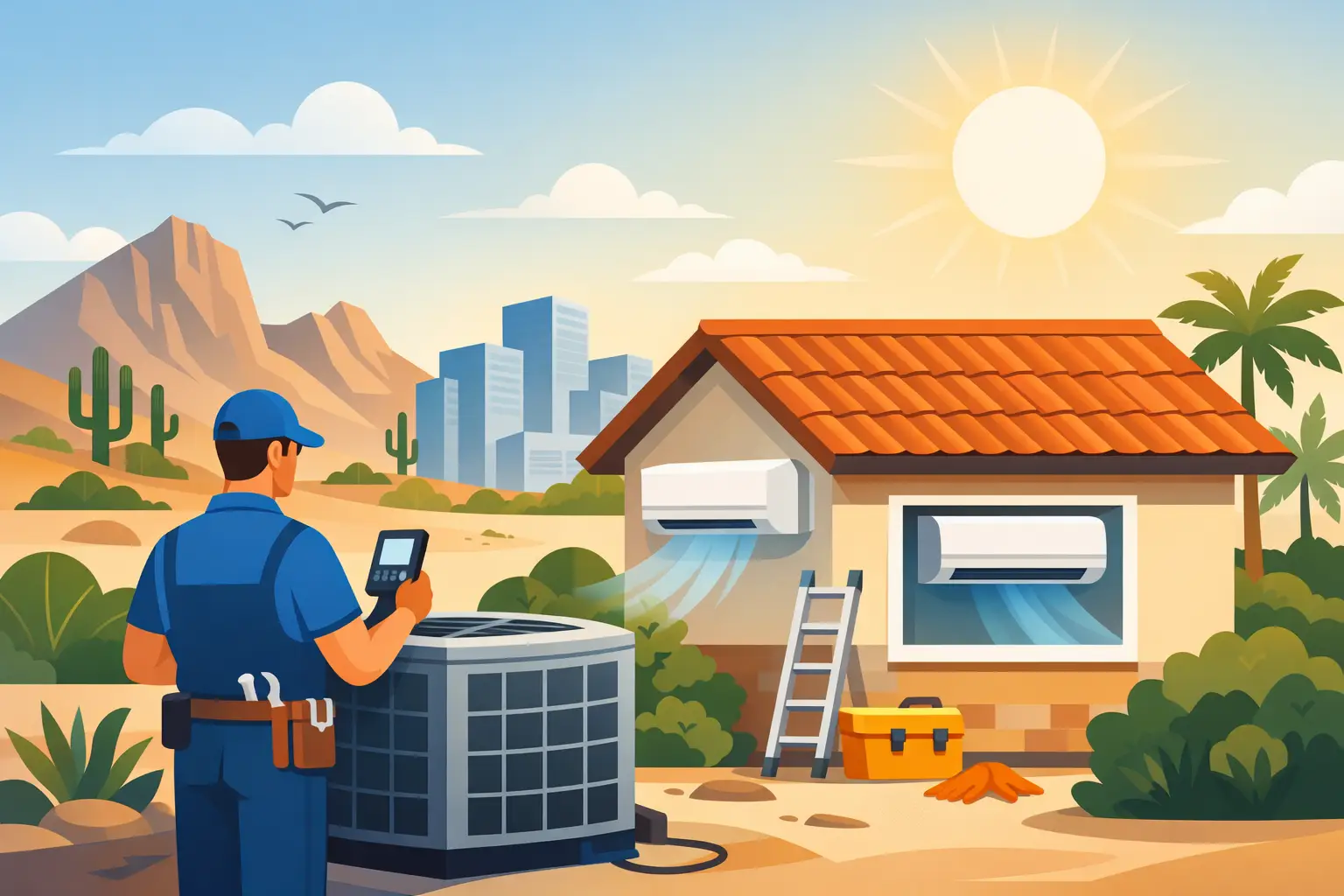
A rental AC failure in Tempe is not a minor inconvenience when outdoor temperatures are well over 100 degrees. A practical landlord HVAC maintenance checklist helps protect tenant comfort, reduce emergency calls, and give you a clearer record of how your equipment has been cared for. It also helps you plan replacements before an aging system chooses the hottest week of the year to quit.
For Maricopa County rentals, HVAC maintenance is largely about cooling reliability, but the heating side still deserves attention. A system that is cleaned, inspected, and tested on a schedule is more likely to operate efficiently and less likely to leave a tenant without conditioned air when they need it most.
Why HVAC Maintenance Belongs in Every Rental Plan
Landlords are responsible for maintaining a livable property, and heating and cooling equipment is a major part of that responsibility. Exact obligations can depend on the lease, local requirements, and the condition that caused the problem, but preventive service is the part you can control before a dispute or urgent repair arises.
Routine maintenance also makes financial sense. Dirty filters, blocked outdoor coils, worn electrical parts, and low airflow can force a system to run longer than necessary. In Arizona, that added strain can turn a manageable repair into a compressor, blower motor, or electrical failure.
A documented maintenance history is useful when you are evaluating a repair recommendation, comparing the condition of systems across several properties, or deciding whether replacement is more practical than another major repair. Keep invoices, technician reports, filter-change records, and notes about tenant-reported issues with your property files.
Landlord HVAC Maintenance Checklist by Season
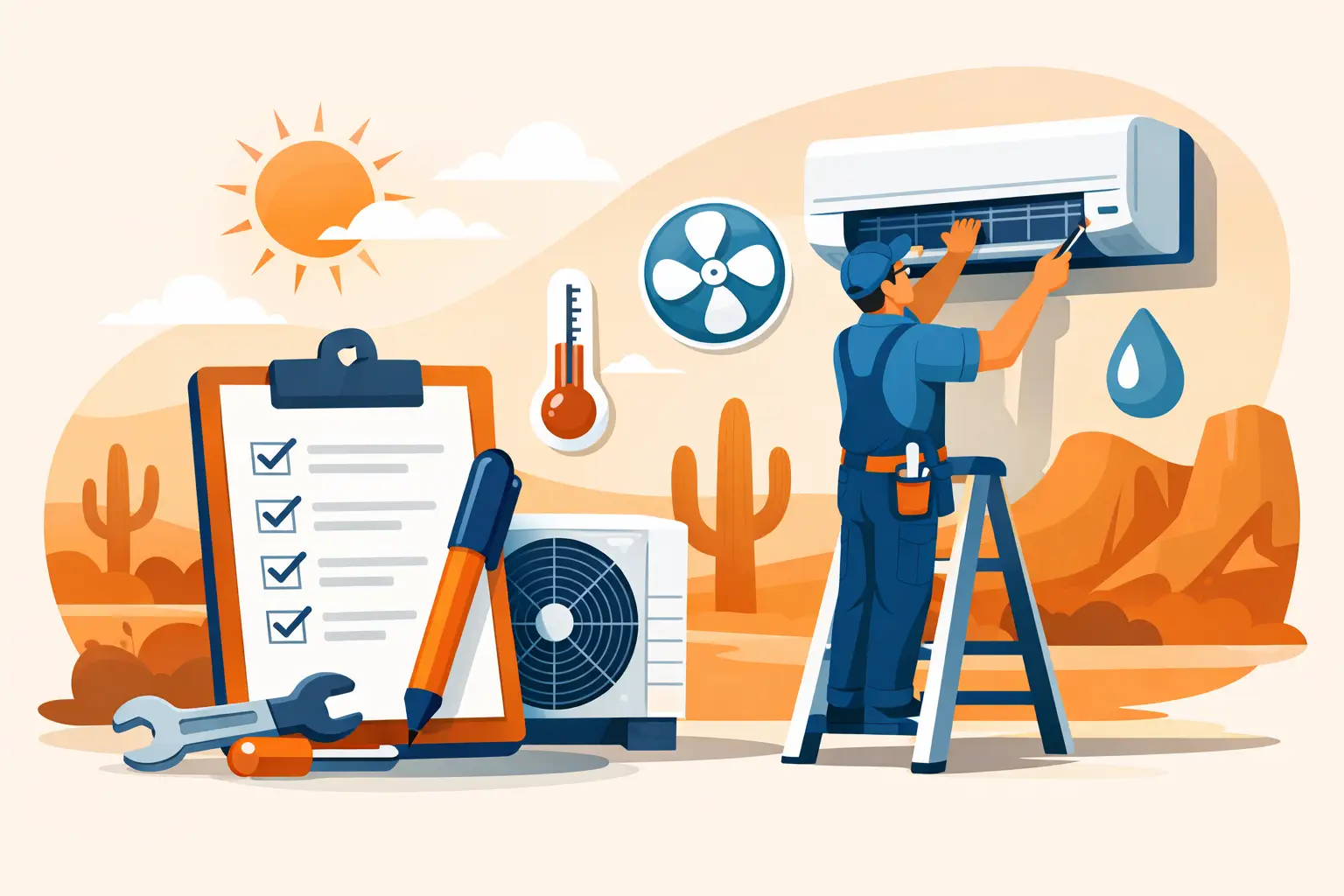
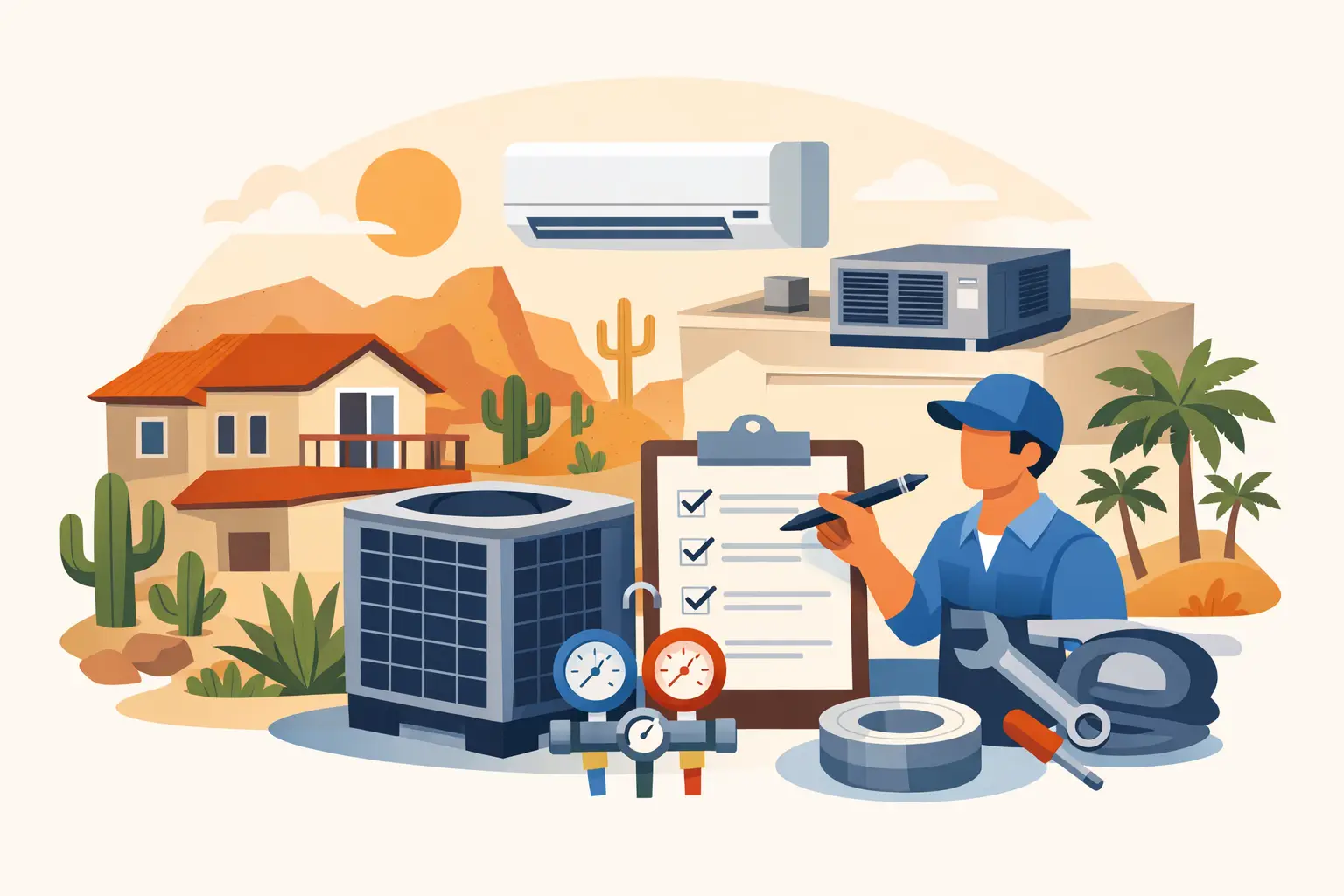
A checklist works best when it assigns a timeframe, a responsible party, and a record of completion. Some tasks can be handled by a landlord, property manager, or tenant when the lease allows. Electrical, refrigerant, combustion, and internal equipment work should be left to a licensed HVAC technician.
Before Arizona's cooling season
Schedule professional service in spring, ideally before the first sustained heat wave. This is the most valuable appointment of the year for most rental properties in Tempe and across Maricopa County. Waiting until June or July can mean longer repair schedules and a greater chance that a small issue becomes an urgent one.
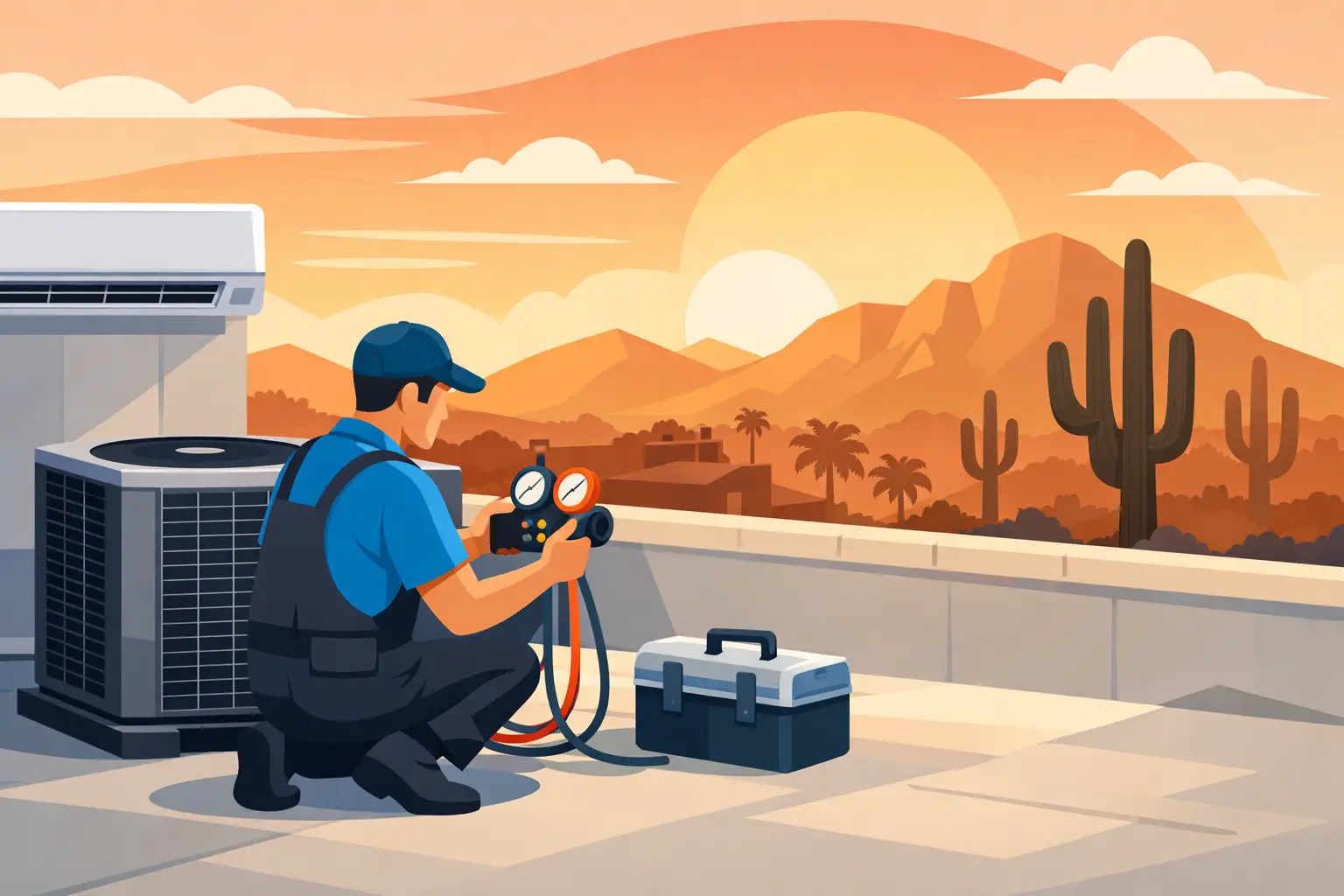
During a cooling maintenance visit, have the technician inspect and clean the outdoor condenser coil, confirm refrigerant performance, inspect electrical connections and capacitors, test the blower and thermostat, clear the condensate drain, and check supply and return airflow. The technician should also look for damaged insulation on refrigerant lines, signs of rodent damage, and deteriorated disconnects or wiring near the outdoor unit.
Ask for a written assessment of the system's overall condition. If the equipment is older, you want more than confirmation that it is running today. You need to know whether parts are showing wear, whether efficiency is declining, and whether replacement planning should begin before the next cooling season.
During the summer
Check filters regularly throughout the cooling season. In many occupied Arizona rentals, filters need attention every 30 to 90 days. The right interval depends on the filter type, whether tenants have pets, indoor dust levels, and how heavily the system runs. A restrictive filter left in place too long can reduce airflow and contribute to frozen coils or blower problems.
Make sure the outdoor unit has open space around it. Remove weeds, leaves, loose debris, and stored items that restrict airflow. Do not allow tenants or landscapers to pile materials against the condenser, and do not cover it while it is operating.
Pay attention to early warning signs reported by tenants. Weak airflow, rooms that will not cool evenly, unusual noises, water around an indoor unit, repeated thermostat adjustments, or a sharp rise in utility use may point to a problem worth addressing before the system stops. Encourage tenants to report these conditions promptly rather than waiting for a complete breakdown.
After monsoon weather
Monsoon dust, wind, and rain can affect outdoor HVAC equipment. After major storms, visually check that the condenser is clear of debris and that the electrical disconnect and pad have not been damaged. If you notice bent coil fins, standing water, shifted equipment, or unusual operation, schedule an inspection.
Do not spray the unit with a high-pressure washer or try to open electrical panels yourself. Coil cleaning and electrical checks require the right process and equipment. A quick visual review can identify obvious concerns, but professional service protects both the system and the person working around it.
Before the heating season
Arizona winters are milder than many parts of the country, but a heating check still matters. Schedule service in fall if your spring appointment did not include a full heating inspection. The technician should test the thermostat, inspect the furnace or heat pump, verify safe electrical operation, inspect the heat exchanger where applicable, and confirm that the system cycles correctly.
For gas furnaces, maintain working carbon monoxide alarms as required and replace batteries or units according to the manufacturer's instructions. Tenants should never ignore fuel odors, soot, repeated shutdowns, or headaches that occur when the heat is running. Those are reasons to call for professional help immediately.
What Landlords, Tenants, and Technicians Should Handle
Clear responsibilities prevent small maintenance tasks from falling through the cracks. Your lease should state who changes filters, how often they are changed, how tenants report HVAC concerns, and whether tenants may install their own thermostat or window units. If tenants are responsible for filters, consider supplying the correct size and type so there is no guesswork.
Landlords or property managers can coordinate access, approve repairs, keep the outdoor area clear, replace filters when that is part of the property service plan, and maintain records. Tenants can report problems early, keep vents uncovered, avoid blocking returns with furniture, and use the thermostat reasonably.
A qualified HVAC technician should handle annual tune-ups, refrigerant work, internal cleaning, electrical testing, drain repairs, duct concerns, and any diagnosis beyond basic filter replacement. Refrigerant and electrical components are not do-it-yourself rental maintenance items.
Do Not Overlook Ducts, Drains, and Thermostats
The air conditioner gets most of the attention, but comfort complaints often start elsewhere. A clogged condensate drain can create water damage and shut down some systems. Damaged or disconnected ductwork can make one room hot while the rest of the home seems fine. A poorly located or malfunctioning thermostat can cause short cycling, uneven temperatures, or tenant frustration.
During inspections, ask the technician to check accessible duct connections and look for obvious leakage or insulation damage. If a property has persistent hot rooms, it may need a more detailed airflow or duct evaluation. Replacing equipment without addressing duct restrictions can leave the same comfort problem in place.
Smart thermostats can be useful in some rentals, particularly for vacant-property temperature monitoring. They are not the right answer for every property, though. Consider Wi-Fi reliability, tenant privacy, who controls scheduling, and whether the device is compatible with the existing system before installing one.
Plan for Repairs and Replacement Before an Emergency
No maintenance program eliminates every failure. Capacitors, motors, controls, and compressors can fail without much warning, especially under long summer run times. The goal is to reduce avoidable failures and make the remaining ones easier to handle.
Keep the age, model number, service history, and known issues for each system in one place. When equipment approaches the later part of its expected service life, set aside funds for replacement and discuss options before a failure forces a rushed decision. Repair may be the sensible choice for a newer system with an isolated issue. Replacement may be more practical when an older unit needs a costly major component, has repeated repairs, or cannot deliver dependable cooling.
For vacant homes, do not turn HVAC attention off completely. Set an appropriate temperature, check that the system is operating, and inspect the property periodically. Extreme heat can expose equipment problems quickly, even when no tenant is present to report them.
Keep the Checklist Simple Enough to Use
A maintenance plan only works if it is followed. Set recurring spring and fall reminders, record filter changes, respond quickly to tenant reports, and save professional service documentation. For multi-property owners, a simple spreadsheet with property address, system age, filter size, last service date, and repair notes can prevent costly oversights.
When a rental system needs dependable local attention, SMW Refrigeration & Heating brings decades of experience serving Tempe and Maricopa County. A scheduled inspection today is easier to manage than an AC outage when your tenant needs cooling most.
Need HVAC Service?
Call SMW Refrigeration & Heating for expert service throughout Maricopa County.
Call (602) 992-1930Related service
AC repair & air conditioning service in Tempe →