Air Conditioner Maintenance Checklist for Arizona
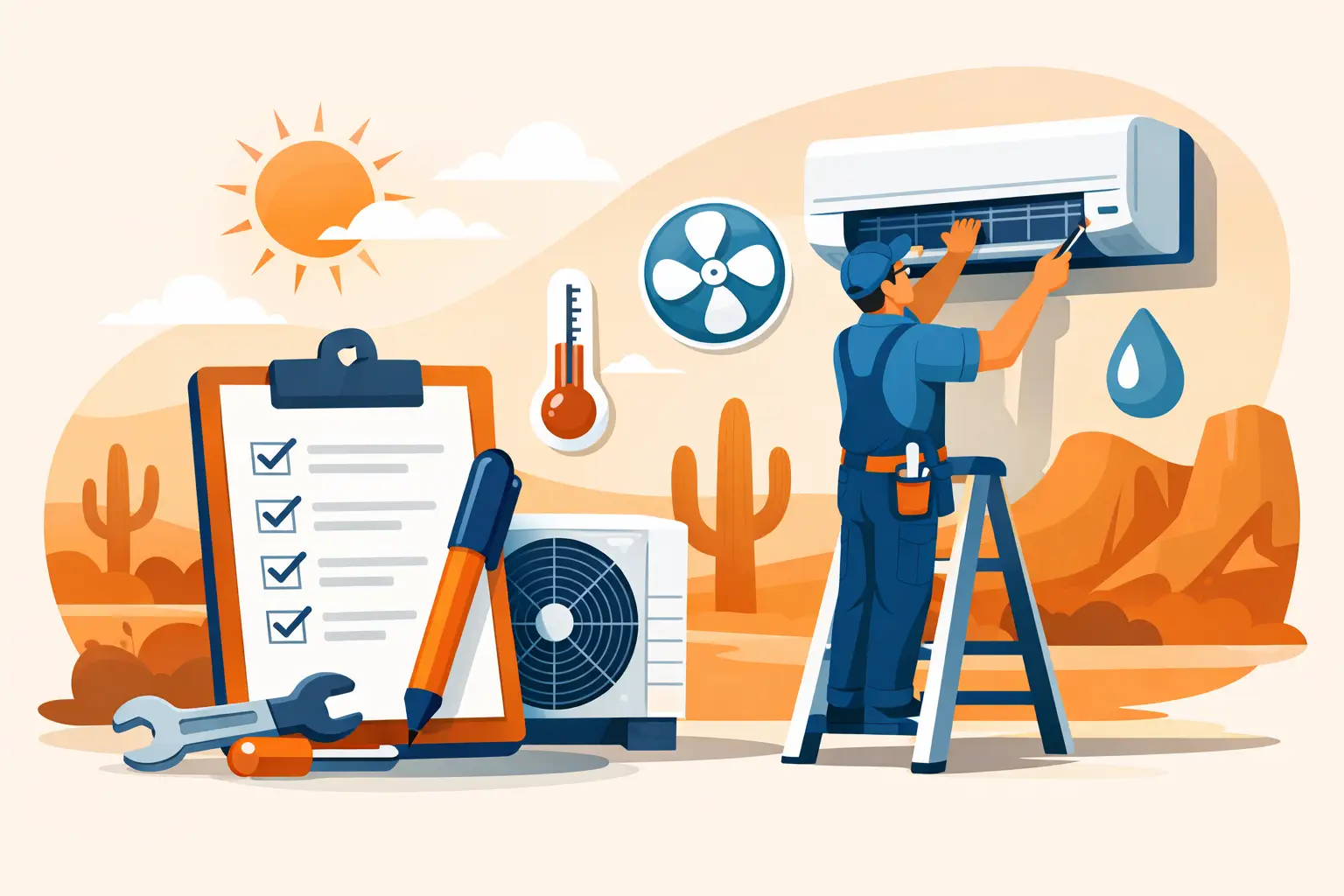
A Tempe air conditioner can run for hours without a break when summer temperatures climb. That workload makes routine care less of a nice-to-have and more of a practical way to prevent a hot house, unhappy tenants, or a midseason repair call. This air conditioner maintenance checklist separates the safe tasks most property owners can handle from the work that should be left to a licensed HVAC technician.
Air Conditioner Maintenance Checklist for Homeowners
Start with the items that protect airflow. Restricted airflow is one of the most common reasons an AC system runs longer than it should, cools unevenly, or develops frozen indoor coils.
Check and replace the air filter
Inspect the filter every month during heavy cooling season. A standard 1-inch filter may need replacement every 30 to 90 days, but Arizona homes with pets, dust, remodeling activity, or frequent system use may need it sooner. If you can no longer see light through the filter, replace it.
Use the filter size and rating recommended for your equipment. A very high-efficiency filter can catch more particles, but it may also restrict airflow if the system was not designed for it. When in doubt, a properly fitted filter changed regularly is more valuable than an expensive filter left in place too long.
Clear the outdoor condenser area
The outdoor unit needs open space to release heat. Turn the thermostat off before working nearby, then remove leaves, grass clippings, plastic bags, and other debris from around the condenser. Keep shrubs and plants trimmed back at least 2 feet where possible, and avoid stacking items against the unit.
Do not cover the condenser while it is operating. Also, do not bend the thin metal fins or force a pressure washer through them. Damaged fins and high-pressure water can reduce airflow or harm the unit. A technician can safely clean a heavily soiled coil during a maintenance visit.
Look at the condensate drain area
Your AC removes humidity from the indoor air, even in our dry climate. That moisture drains through a small line near the indoor equipment. Check for water around the air handler, furnace, or drain pan. Water stains, algae buildup, a musty odor, or a safety switch that has shut the system down can point to a drain problem.
A homeowner can keep the area visible and clean, but avoid pouring harsh chemicals into the line. The right cleaning method depends on the drain configuration and material. Repeated clogs deserve professional attention because water damage can become more expensive than the original AC issue.
Test the thermostat and vents
Set the thermostat several degrees below the indoor temperature and confirm that cool air begins flowing from supply vents. Walk through the home or building and make sure vents are open and unobstructed by furniture, rugs, boxes, or curtains.
A room that stays warmer than the rest of the property is not always a thermostat problem. It may involve duct leakage, poor insulation, a zoning issue, an undersized system, or excessive sun exposure. Closing many vents to push more air into one room can increase static pressure and create other problems, so it is not a reliable fix.
What a Professional AC Tune-Up Should Include
Seasonal maintenance goes beyond changing a filter. Modern air conditioning systems contain electrical components, pressurized refrigerant, delicate coils, and moving parts. A licensed technician can inspect those areas safely and identify small changes before they become a no-cool call.
A thorough visit should include an evaluation of the system's cooling operation, electrical connections, capacitors and contactors, blower performance, refrigerant readings, condenser coil condition, and condensate drainage. The technician should also inspect accessible duct connections, insulation on refrigerant lines, and signs of wear around the indoor and outdoor equipment.
The exact work depends on the system. A heat pump needs attention to both cooling and heating operation. A rooftop package unit used by a small business has different access, drainage, and exposure concerns than a split system at a home. Older equipment may need closer monitoring for aging electrical parts or declining efficiency.
Maintenance should not automatically mean adding refrigerant. Refrigerant is not fuel that gets used up during normal operation. If the charge is low, the system may have a leak or another underlying issue that needs diagnosis and repair.
When to Schedule Air Conditioner Maintenance in Maricopa County
For most homes, schedule professional cooling maintenance in spring, before the longest stretch of Arizona heat. This gives you time to address worn parts or performance concerns before your system is working at full capacity every day.
Properties with older systems, multiple tenants, pets, or heavy commercial usage may benefit from two inspections each year. One visit can prepare cooling equipment for summer, while another checks the heating side and overall system condition in fall. Preventive maintenance does not guarantee that a component will never fail, but it substantially improves the chance of finding trouble early.
Landlords and small commercial property managers should keep a simple service record. Note filter changes, maintenance dates, repair history, and tenant reports of temperature problems. Patterns matter. A unit that needs repeated drain clearing, cycles frequently, or struggles in the same afternoon conditions may be signaling a larger problem.
Warning Signs That Should Not Wait
A maintenance checklist is useful, but some symptoms call for a service visit rather than more troubleshooting. Turn the system off and arrange professional help if you notice any of the following:
- Warm air coming from vents when cooling is selected
- Ice on the refrigerant line, indoor coil area, or outdoor unit
- Burning smells, buzzing, repeated breaker trips, or a system that will not start
- Water leaking around indoor equipment or through a ceiling
- Loud grinding, banging, or metal-on-metal noises
- Rapid cycling, weak airflow, or a sharp jump in utility costs
Do not keep resetting a breaker or repeatedly turning the thermostat on and off to force the system to run. Electrical faults and compressor problems can worsen with continued operation. If the indoor system is frozen, leave it off and allow it to thaw rather than chipping at the ice or running it in cooling mode.
Common Maintenance Mistakes to Avoid
The biggest mistake is waiting until the AC quits during a heat wave. By then, service demand is high and a minor issue may have already damaged another component. Regular filter changes and a pre-season inspection are simple habits that reduce that risk.
Another mistake is using the outdoor disconnect as an everyday on-off switch. That disconnect is a safety device for servicing the equipment, not a substitute for the thermostat. Likewise, do not attempt electrical repairs, coil cleaning with aggressive chemicals, or refrigerant work without proper training and equipment.
Be cautious with online advice that treats every cooling issue as a quick part replacement. A failed capacitor, dirty coil, thermostat error, duct restriction, and refrigerant problem can create similar symptoms. Correct diagnosis protects both the equipment and your budget.
Make Maintenance Part of Your Summer Plan
Put a filter reminder on the calendar, keep the outdoor unit clear, and pay attention when your system sounds or feels different. Those small checks give a technician better information and help avoid preventable strain during the hottest part of the year.
For homeowners, landlords, and small businesses in Tempe and across Maricopa County, SMW Refrigeration & Heating provides dependable maintenance and repair support backed by local experience since 1964. Scheduling service before peak heat arrives is one of the simplest ways to protect comfort when your AC is needed most.
Need HVAC Service?
Call SMW Refrigeration & Heating for expert service throughout Maricopa County.
Call (602) 992-1930Related service
AC repair & air conditioning service in Tempe →