How Often Should HVAC Be Serviced in Arizona?
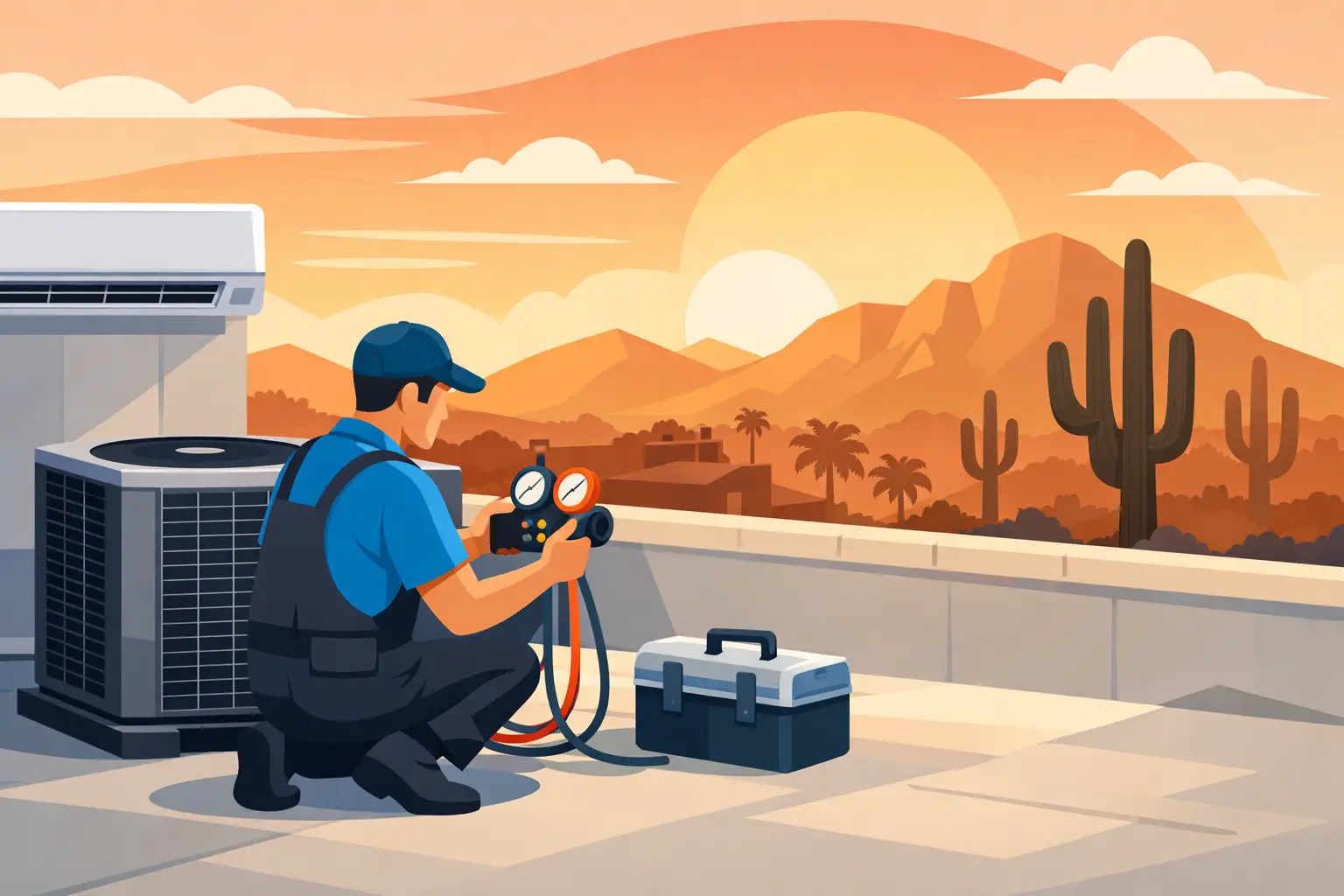
A Tempe air conditioner can run hard for months without much of a break. That is why the answer to how often should HVAC be serviced is different in Maricopa County than it may be in a milder climate. For most homes and small commercial properties, professional HVAC maintenance twice a year is the practical standard: once before the cooling season and once before the heating season.
That schedule is not about selling unnecessary visits. It is about finding small problems - a weak capacitor, dirty coil, worn electrical connection, restricted drain line, or low airflow - before they become a no-cooling call on a 110-degree afternoon. Regular service also gives a technician a clear picture of how your system is aging, so repair and replacement decisions are based on condition rather than guesswork.
How Often Should HVAC Be Serviced?
Most Arizona homeowners should schedule service two times per year. Plan an air conditioning tune-up in spring, ideally before sustained heat arrives, and have the heating side checked in fall before the first cold nights. Even though the Valley is known for intense summers, furnaces and heat pumps still need attention before winter use.
For a heat pump, which provides both cooling and heating, two maintenance visits remain a good rule. The same equipment works nearly year-round, and Arizona dust, high outdoor temperatures, and long run times can add wear. A spring visit focuses on cooling performance, while a fall visit confirms the heating cycle, safety controls, and electrical components are ready.
Some properties need more frequent attention. A system may benefit from three or four checks a year when it serves a small business, has heavy daily occupancy, operates in a dusty setting, or has a history of recurring issues. Landlords with several units may also prefer a planned maintenance schedule so tenant comfort problems are addressed before peak demand.
Why Arizona Systems Need a Consistent Schedule
An HVAC system does not have to stop working to need service. In fact, waiting for a breakdown is often the most expensive maintenance plan available. During extreme heat, a unit can lose efficiency gradually while still cooling the home. You may first notice longer cycles, uneven room temperatures, higher utility bills, or a thermostat that never seems to catch up.
Dust is a constant concern in the Tempe area. It can collect on filters, blower components, outdoor coils, and condenser fins. When airflow is restricted or the outdoor unit cannot release heat effectively, the system works harder to produce the same result. That extra strain can shorten the life of motors, capacitors, and the compressor.
Drainage is another common issue. Air conditioners remove moisture from indoor air, and that water must leave through a condensate drain. A clogged drain can cause water leaks, shut down the system through a safety switch, or create moisture problems near the air handler. Catching this during routine service is far easier than dealing with ceiling or wall damage later.
What a Professional HVAC Service Visit Should Include
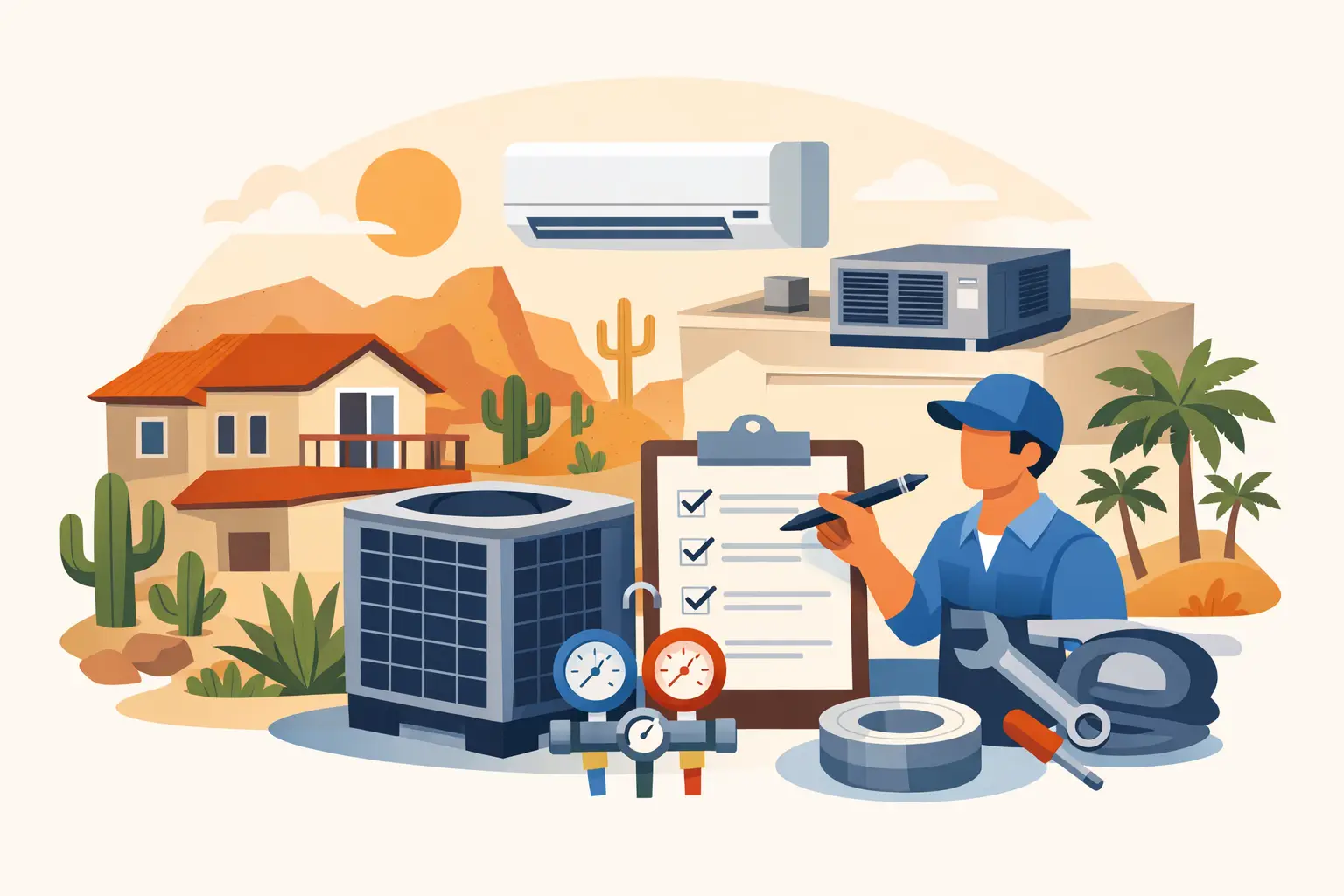
A proper maintenance visit is more than replacing a filter and looking at the thermostat. The exact checklist varies by system type and condition, but a qualified technician should inspect the parts that affect safety, reliability, efficiency, and comfort.
During cooling maintenance, that commonly includes checking refrigerant performance, testing capacitors and electrical connections, inspecting the condenser coil and blower, confirming proper airflow, clearing the condensate drain, and verifying thermostat operation. The technician should also listen for unusual noises and look for wear that could lead to an in-season failure.
Heating service includes checking the ignition sequence, burners, heat exchanger condition, safety controls, venting, blower operation, and carbon monoxide risks for gas furnaces. Heat pumps require testing in heating mode and inspection of the defrost cycle. These checks matter even in Arizona, where a heater may sit unused for much of the year.
A good service appointment should leave you with useful information. You should understand whether the system is operating normally, what repairs are urgent, what can be monitored, and whether the equipment is approaching the point where replacement deserves consideration.
Between Visits, Handle the Basics
Professional maintenance cannot be replaced by homeowner care, but a few simple habits can protect your system between appointments. Check your air filter every month during heavy use and replace it when it is visibly loaded with dust. Many homes need a new filter every one to three months, although filter type, pets, occupancy, and construction activity can change that timing.
Keep the outdoor unit clear of leaves, weeds, stored items, and other obstructions. It needs open space around it to move air. Do not cover the unit tightly or spray it with harsh chemicals. If the coil appears dirty, ask a technician to assess and clean it properly during service.
Inside, pay attention to changes in performance. A new rattle, warm air from supply vents, weak airflow, frequent cycling, or water around the indoor unit should not wait until the next seasonal checkup. Early service can prevent a more serious failure and may limit damage to other components.
When to Schedule More Than Twice a Year
Twice-yearly maintenance is the baseline, not a hard rule for every property. Older systems often need closer observation. Once an HVAC system reaches roughly 10 to 15 years old, repair needs can become less predictable, especially if it has endured many Arizona summers. Additional inspections can be worthwhile if the unit has already needed repeat repairs or has trouble holding temperature during peak heat.
Homes with pets, smokers, frequent guests, or remodeling work may also need more frequent filter changes and occasional airflow checks. A heavily used vacation rental or rental property has little room for a surprise outage. For property owners, preventive service can help avoid emergency calls, unhappy tenants, and lost business during the busiest part of the season.
Small commercial systems deserve special attention. Restaurant offices, retail spaces, salons, and other light commercial buildings may have longer operating hours and higher internal heat loads than a typical home. A failed unit can affect employees, customers, inventory, and daily operations. Quarterly maintenance is often a sensible option for equipment that works hard every day.
Maintenance Helps, but It Cannot Fix Every Aging System
Routine service is one of the best ways to extend equipment life, but it does not make an old or undersized system new again. If your AC has frequent refrigerant leaks, a failing compressor, repeated electrical repairs, or cannot maintain comfort even after repairs, it may be time to compare the cost of continued repairs with replacement.
There are trade-offs. Repairing a system can make sense when the issue is isolated and the equipment otherwise performs well. Replacement can be the better long-term choice when repair costs keep rising, efficiency is poor, parts are becoming difficult to find, or reliability is no longer acceptable for your household or tenants.
A maintenance technician should not pressure you into replacement simply because a system is older. The useful conversation is about the unit's actual condition, repair history, operating cost, and your plans for the property. A clear assessment lets you make a decision on your schedule whenever possible, rather than during an emergency.
Choose the Right Time to Book Service
Spring and fall are the best times to schedule routine maintenance because demand is typically lower than it is during the hottest and coldest stretches. Booking before the first major heat wave gives you time to address a developing issue without the pressure of a system failure.
If you have missed a seasonal visit, do not wait for the calendar to be perfect. Service is worthwhile at any point in the year, particularly if the unit is running longer than usual or showing warning signs. The goal is dependable operation when your home or business needs it most.
For Tempe and Maricopa County property owners, a twice-yearly schedule is a straightforward way to protect comfort and reduce avoidable surprises. SMW Refrigeration & Heating has served local customers since 1964, and a timely maintenance visit can help keep a minor concern from becoming the call you have to make in the middle of the night.
Need HVAC Service?
Call SMW Refrigeration & Heating for expert service throughout Maricopa County.
Call (602) 992-1930Related service
AC repair & air conditioning service in Tempe →