How to Know if Your AC Is Failing: 10 Signs
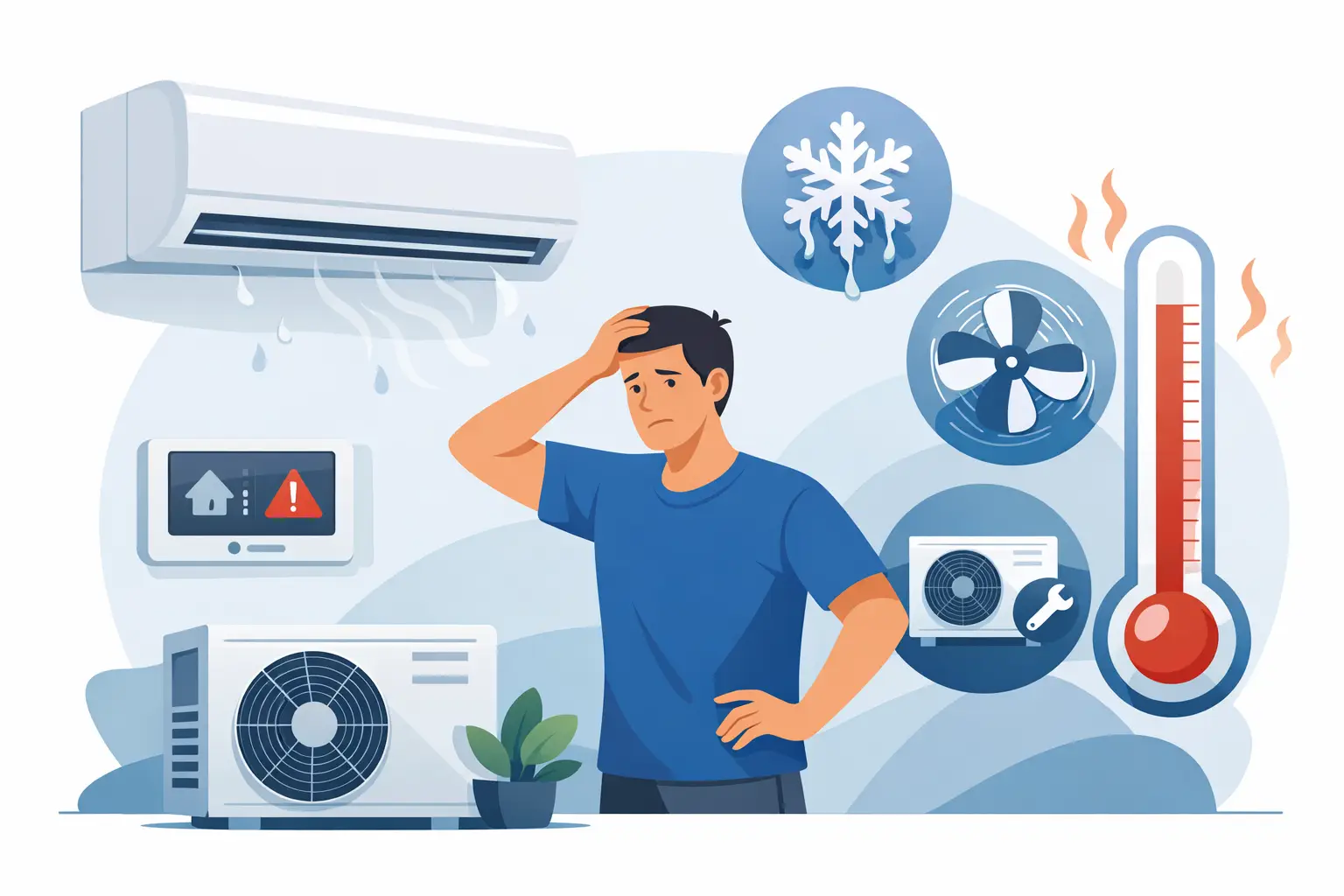
A Tempe air conditioner can seem fine at breakfast and struggle to keep up by late afternoon. Knowing how to know AC failing before it stops altogether gives you time to schedule service, avoid a more uncomfortable emergency, and protect your home or business during extreme Arizona heat.
Most AC problems do not begin with a complete shutdown. They start with subtle changes in cooling, airflow, noise, or energy use. Some are straightforward maintenance issues. Others point to electrical, refrigerant, or mechanical problems that require a qualified HVAC technician.
How to Know if Your AC Is Failing
1. Your home is not reaching the thermostat setting
If the thermostat is set to 75 degrees but the indoor temperature stays at 80 or climbs through the afternoon, your system is not delivering enough cooling. First, make sure doors and windows are closed, the thermostat is set to cool, and the air filter is not clogged.
If those basics check out, the issue may involve low refrigerant, a failing compressor, dirty coils, duct leakage, or an undersized system. In Maricopa County, an AC that barely keeps up in high heat is not something to ignore. Continued operation can place more strain on components already under stress.
2. Air coming from the vents feels warm or only mildly cool
Your supply vents should deliver noticeably cool air while the system is running. Air that feels room temperature, warm, or only slightly cool is one of the clearest warning signs.
A dirty filter can reduce airflow, but weak cooling can also signal a refrigerant issue, frozen evaporator coil, compressor problem, or thermostat malfunction. Avoid assuming the unit simply needs refrigerant. Refrigerant does not get used up under normal operation, so low levels can indicate a leak that needs to be found and repaired.
3. Airflow has become weak in one or more rooms
Weak airflow makes a home feel uneven even when the AC runs for long periods. You may notice that the living room is comfortable while bedrooms stay stuffy, or that certain vents barely move air.
Start with the filter and confirm that all supply vents and return grilles are open and unobstructed. If airflow remains poor, the cause could be a blower motor issue, a blocked coil, ductwork damage, or a system that needs professional cleaning and inspection. Weak airflow can also lead to icing and premature wear because the equipment cannot circulate air properly.
4. The system runs constantly or cycles on and off too often
During a Tempe heat wave, it is normal for an AC to run for longer stretches. It is not normal for it to run nearly nonstop without lowering the temperature, or to turn on and off every few minutes.
Constant operation may mean the system is losing cooling capacity or battling a thermostat, airflow, insulation, or equipment problem. Frequent short cycling can be especially hard on the compressor and electrical components. Because several problems can create the same symptom, an inspection is the best way to determine whether the issue is minor or developing into a costly repair.
5. Your electric bill rises without a clear reason
A larger summer bill is expected when temperatures rise. A sharp increase compared with similar weather and household use is different. When an aging or malfunctioning AC has to work harder to cool the same space, it consumes more electricity.
Compare your recent bills with the same period last year when possible. Also consider changes such as more people at home, a new appliance, or a different thermostat schedule. If nothing significant has changed, declining AC efficiency may be part of the problem. Maintenance can sometimes restore performance, while a repair may be needed if a component is failing.
6. You hear new or unusual noises
Your air conditioner will make some operational sound, especially at startup. What deserves attention is a new noise that is loud, repeated, or getting worse. Banging, clanking, grinding, squealing, buzzing, and rattling can each point to different issues.
A loose panel may cause a simple rattle. Grinding can indicate a motor or bearing problem. Persistent buzzing may involve an electrical component. Do not remove electrical panels or continue running the system if you hear loud mechanical noises, as waiting can turn a repairable issue into more extensive equipment damage.
7. You notice water, ice, or refrigerant-related concerns
A small amount of water draining outside near the condensate line can be normal. Water pooling around the indoor unit, ceiling stains near an air handler, or moisture where it does not belong is not. A clogged condensate drain, drain pan problem, or frozen coil can all create water issues.
Ice on the refrigerant line or indoor coil is another warning sign. It can result from restricted airflow, a dirty filter, low refrigerant, or a mechanical issue. Turn the system off if ice is present and arrange service rather than trying to chip or melt it away. If you suspect a refrigerant leak, leave the repair to a licensed professional.
8. The AC produces musty, burning, or chemical odors
A musty smell when the system starts may be related to moisture and microbial growth around the coil or drain system. A burning smell can point to an overheated electrical component, motor, or wiring issue. A sharp chemical odor may also warrant attention.
Replace a dirty filter if needed, but do not use heavy fragrances to cover up persistent odors. If you smell burning, see smoke, or notice repeated electrical odors, turn off the unit and seek prompt professional help. Electrical concerns should never be treated as a wait-and-see problem.
9. Humidity and comfort have changed indoors
Air conditioning does more than lower the temperature. It also helps remove moisture from indoor air. In Arizona, excess indoor humidity may be less obvious than it is in other climates, but a home that suddenly feels clammy or uncomfortable can still indicate a performance problem.
You may also notice more hot and cold spots, poor sleep, or a house that feels stale even though the AC is running. These symptoms do not always mean the equipment is failing. Ductwork, thermostat placement, insulation, and airflow balance matter too. A proper evaluation looks at the full system rather than replacing parts based on one symptom.
10. Your AC needs repairs more often or is nearing the end of its service life
Repeated repairs are often the most practical sign that it is time to consider your options. One isolated repair does not automatically justify replacement. However, if breakdowns are becoming frequent, comfort is declining, and repair costs are adding up, a repair-versus-replacement discussion makes sense.
Age matters, but condition matters more. A well-maintained system may provide dependable service for years, while a neglected unit can fail early. The right choice depends on the repair needed, the equipment's overall condition, efficiency, and how reliably it can handle another Arizona summer.
What to Do When You See AC Failure Signs
Begin with safe, simple checks: verify the thermostat settings, replace a visibly dirty filter, ensure vents are open, and look for an obvious tripped breaker. Do not repeatedly reset a breaker, open sealed refrigerant components, or work around electrical wiring. Those steps can create safety risks and make diagnosis harder.
If cooling remains weak, the unit is short cycling, leaks are appearing, or unusual noises and odors continue, schedule a professional inspection promptly. For landlords and small commercial property managers, acting early can help avoid tenant discomfort, business disruption, and an after-hours equipment failure.
SMW Refrigeration & Heating has served Tempe and Maricopa County since 1964 with dependable residential and light commercial HVAC service, including emergency AC repair when a problem cannot wait.
A struggling AC does not always mean replacement is around the corner. Addressing the first changes you notice can often protect comfort, reduce strain on the system, and give you clearer choices before the next stretch of extreme heat.
Need HVAC Service?
Call SMW Refrigeration & Heating for expert service throughout Maricopa County.
Call (602) 992-1930Related service
Ductwork & duct sealing services →