HVAC Refrigerant Phaseout Changes in Arizona
A working air conditioner is not optional during a Tempe summer. That is why HVAC refrigerant phaseout changes can sound alarming to homeowners, landlords, and small business owners who depend on older cooling equipment. The practical reality is less dramatic: most existing systems can continue to be repaired and maintained. The changes mainly affect the refrigerants used in new equipment and the choices you will make when it is time to replace an aging unit.
Federal rules are moving the HVAC industry away from higher-global-warming-potential refrigerants. For Maricopa County property owners, the key is knowing what equipment you have, what can still be serviced, and when replacement makes more financial sense than another repair.
What HVAC Refrigerant Phaseout Changes Mean
The current transition is driven by federal rules that reduce the use of hydrofluorocarbons, or HFCs. These refrigerants do not damage the ozone layer like older refrigerants did, but many have a high global warming potential. The Environmental Protection Agency is reducing their production and use over time while setting limits for refrigerants in newly manufactured equipment.
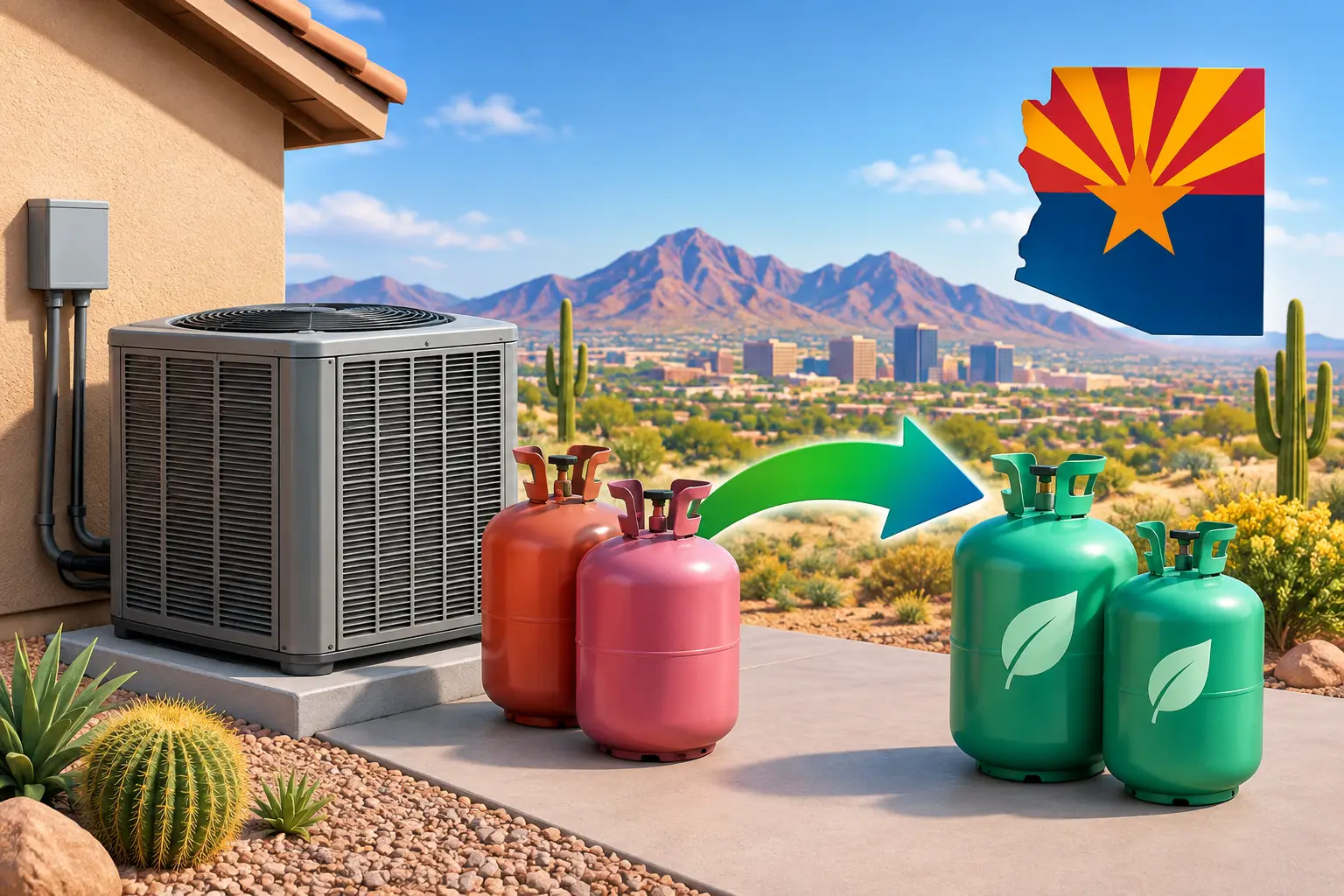
R-410A has been the standard refrigerant in many residential air conditioners and heat pumps installed over the last two decades. Beginning in 2025, newly manufactured residential and light commercial comfort cooling equipment is generally required to use refrigerants with a global warming potential below 700. That means new systems are shifting to lower-impact options, commonly R-454B and, in some applications, R-32.
This is not a deadline that makes an existing R-410A system illegal or unusable. If your current air conditioner is cooling properly, there is no requirement to remove it simply because it uses R-410A. It can still be maintained, repaired, and recharged when appropriate.
Your Existing AC Can Still Be Repaired
For most property owners, this is the most useful part to understand. A refrigerant phaseout does not mean service stops overnight. Technicians can continue servicing existing systems with R-410A, including diagnosing leaks, replacing failed components, and adding refrigerant when the repair is justified.
Over time, however, the supply picture may change. As production allowances decline, the price of newly produced R-410A can become less predictable. Reclaimed refrigerant, which is recovered, cleaned, tested, and certified for reuse, will also play a larger role in servicing older systems. Availability and pricing can vary based on market conditions, demand, and the size of the repair.
A refrigerant leak should never be treated as a routine refill. Refrigerant is contained in a closed system. If the charge is low, a qualified technician should locate the cause, discuss repair options, and verify proper performance after the repair. Repeatedly adding refrigerant without addressing a leak can turn a manageable problem into an expensive one.
For a newer R-410A system with a repairable leak or component failure, repair is often the sensible choice. For a system nearing the end of its useful life, especially one with a major compressor issue or recurring refrigerant leaks, replacement may provide better long-term value.
What Is Different About New Refrigerants?
Many new air conditioning systems will use refrigerants classified as A2L. This classification means they have lower toxicity and mild flammability under certain conditions. They are not handled the same way as the refrigerants used in older residential systems.
That does not mean new equipment is unsafe. It means the equipment is designed specifically for the refrigerant it uses, and technicians need the proper training, procedures, tools, and recovery equipment. Manufacturers also build in safety features and installation requirements that account for the refrigerant classification.
A new R-454B or R-32 system cannot be charged with R-410A, and an older R-410A system cannot simply be converted to use a new refrigerant. Refrigerants, compressors, oils, controls, coils, and safety requirements are matched as a complete system. Trying to mix or substitute refrigerants can damage equipment, create safety concerns, void warranties, and lead to code issues.
When Replacement May Make Sense
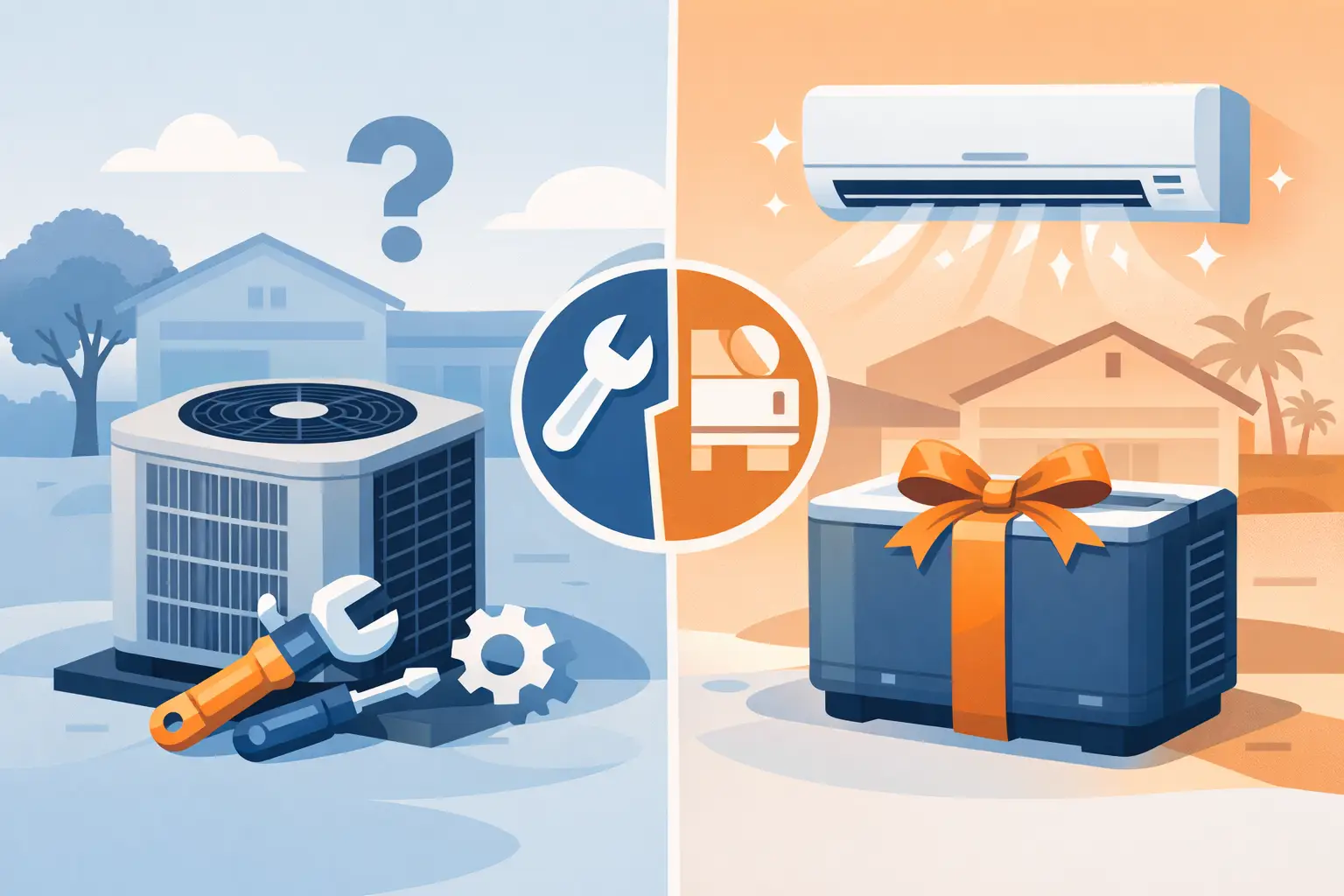
The refrigerant transition is one factor in a replacement decision, but it should not be the only one. Arizona’s long cooling season places heavy demand on air conditioning systems. Age, efficiency, repair history, ductwork condition, indoor comfort, and utility costs deserve equal consideration.
Replacement may be worth discussing when an existing system is 12 to 15 years old or older, needs a major repair, has a confirmed refrigerant leak, or struggles to keep the home or building consistently cool. A system that runs constantly in the afternoon, leaves certain rooms warm, or produces unusually high electric bills may have issues beyond refrigerant alone.
For landlords and small commercial property owners, planned replacement can reduce the risk of an emergency failure during peak heat. Waiting until a unit stops cooling in July can limit equipment choices and put tenants or business operations under unnecessary pressure. A planned evaluation allows time to compare properly sized equipment, efficiency ratings, installation requirements, and budget options.
There is also a timing consideration. Equipment manufactured before the new requirements took effect may still be available through existing distributor inventory. Whether that equipment is appropriate depends on the installation date, local code requirements, warranty considerations, and the specific needs of the property. A licensed contractor can explain the available options without pushing a replacement before it is needed.
How to Prepare Without Replacing a Working System
A good plan starts with accurate information. Find the data plate on your outdoor condenser or review your installation paperwork to identify the system model, age, and refrigerant type. If you manage multiple properties, keep this information with maintenance records for each unit.
Regular maintenance is the most practical way to protect an older system during the transition. A professional visit can identify worn electrical components, drainage problems, airflow restrictions, coil buildup, and early signs of refrigerant loss before they lead to a no-cooling call. In the desert, clean coils, proper airflow, and correct refrigerant charge all matter to system performance.
It also helps to set aside a replacement budget before a major failure occurs. You do not need to replace equipment solely because it uses R-410A. But knowing the likely condition of your system and your options for lower-GWP equipment gives you more control when a major repair decision arrives.
Questions to Ask Before Approving a Refrigerant Repair
When a technician finds a refrigerant-related issue, ask what caused the low charge and whether the leak can be located and repaired. Ask how much refrigerant the system needs, what the total repair includes, and whether the repair comes with a workmanship warranty.
If the system is older, ask for a straightforward comparison between repairing it and replacing it. The right answer depends on the condition of the unit, not just the refrigerant label. A small repair on an otherwise dependable system is different from investing heavily in a unit with a failing compressor, declining efficiency, and repeated service history.
You should also ask whether the proposed replacement uses the new refrigerant platform and what maintenance requirements apply. Newer equipment can offer improved efficiency and a lower environmental impact, but proper sizing and installation remain more important than a label on the refrigerant cylinder.
A Practical Approach for Arizona Property Owners
There is no reason to panic-replace an air conditioner that is operating reliably. Continue routine maintenance, address leaks correctly, and make repair decisions based on the system’s overall condition. If replacement is approaching, plan early enough to review equipment choices rather than making a rushed decision in extreme heat.
For more than six decades, SMW Refrigeration & Heating has helped Maricopa County customers make practical heating and cooling decisions based on what their equipment actually needs. Whether your system uses R-410A or a newer refrigerant, careful diagnosis and qualified service remain the best protection for your comfort, budget, and property.
The next time your AC is serviced, ask which refrigerant it uses and how the system is performing overall. That one conversation can turn a confusing industry change into a clear plan for the years ahead.
Need HVAC Service?
Call SMW Refrigeration & Heating for expert service throughout Maricopa County.
Call (602) 992-1930Related service
HVAC replacement & system pricing →