Why Is AC Blowing Warm in Your Arizona Home?

A Tempe AC system can seem fine at breakfast and start pushing warm air by midafternoon. When you are asking, why is AC blowing warm, the answer may be as simple as a thermostat setting or as serious as a failed compressor. In Arizona heat, it is best not to wait and hope the problem corrects itself. Running a struggling system can turn a manageable repair into a larger one.
The first step is to determine whether the air is truly warm, mildly cool but not cooling the home, or moving weakly from the vents. Those symptoms point to different parts of the system. A few safe checks can help, but electrical and refrigerant repairs should always be handled by a licensed HVAC technician.
Why Is AC Blowing Warm? Start With the Simple Checks
Before assuming the equipment has failed, check the thermostat. It should be set to Cool, with the temperature set several degrees below the current indoor temperature. If the fan setting is switched to On, change it to Auto. The On setting runs the indoor blower continuously, including between cooling cycles, so air may feel warm when the outdoor unit is not actively cooling.
Next, check your electrical panel. A tripped breaker for the outdoor condenser can leave the indoor blower operating while the outside portion of the system is off. This creates one of the most common warm-air complaints: air is coming through the vents, but no cooling is taking place. You may reset a breaker once if it has clearly tripped. If it trips again, leave it off and schedule service. Repeated tripping can indicate a wiring issue, a failing motor, or a compressor problem.
A dirty air filter is another common cause of poor cooling in Maricopa County homes. Restricted airflow makes the system work harder and can cause the indoor evaporator coil to freeze. Replace a visibly dirty filter with the correct size and type. Do not use an overly restrictive filter if your system is not designed for it, since that can create its own airflow problem.
Common Mechanical Reasons an AC Blows Warm Air
If the thermostat, filter, and breaker all look normal, the issue may be inside the equipment. Several problems can cause an AC to run without delivering cool air.
Low refrigerant from a leak
Your air conditioner does not use up refrigerant like a car uses fuel. If refrigerant is low, there is usually a leak somewhere in the system. Low refrigerant reduces the unit's ability to absorb heat from inside your home. You may notice longer run times, uneven temperatures, ice on the refrigerant line, or air that is only slightly cool.
Adding refrigerant without locating and repairing the leak is not a lasting solution. A technician should test the system, identify the source of the leak when possible, make the proper repair, and charge the unit to manufacturer specifications. Refrigerant work requires specialized equipment and should not be attempted as a do-it-yourself job.
A frozen evaporator coil
An evaporator coil can freeze when airflow is restricted or refrigerant is low. When ice builds up on the coil, air cannot pass over it properly, and cooling drops off. In some cases, the system may eventually blow warm air.
If you see ice on the copper refrigerant line near the indoor unit or outdoor condenser, turn the cooling mode off. Set the thermostat fan to On only if the system is not making unusual noises, which can help the coil thaw. Do not chip at the ice or pour hot water on the equipment. Once the ice has melted, the underlying cause still needs to be addressed before you restart cooling.
A failed capacitor, contactor, or outdoor fan motor
The outdoor condenser is where your system releases heat from the home. If its fan does not run, or if the compressor cannot start, the system cannot cool properly. You may hear humming, clicking, or notice that the outdoor unit is silent while the indoor blower continues to run.
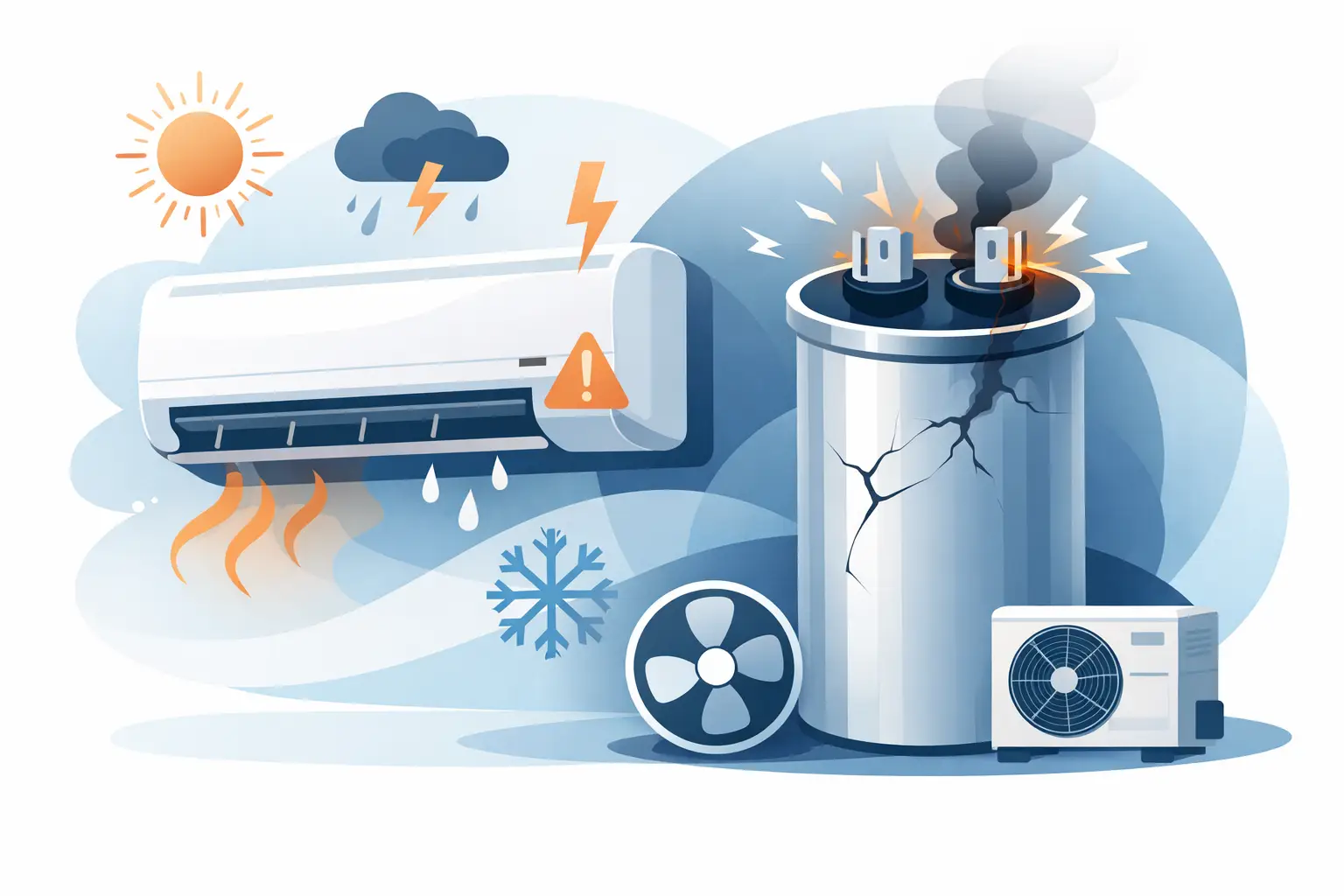
Capacitors and contactors are relatively common repair items in Arizona because extreme heat puts added strain on electrical components. A failing outdoor fan motor can have similar symptoms. These components carry dangerous voltage, even after power is shut off, so this is a service call rather than a homeowner repair.
Compressor trouble
The compressor is the heart of the cooling system. It circulates refrigerant between the indoor and outdoor equipment. When it fails or overheats, your AC may blow warm air, trip breakers, make loud noises, or shut down completely.
Compressor repairs can be significant, especially in an older system. The right decision depends on the unit's age, condition, repair history, efficiency, and the cost of the repair compared with replacement. A dependable technician should explain the findings clearly instead of pushing a replacement when a practical repair is available.
A dirty condenser coil
The outdoor coil must release heat efficiently. Dust, grass clippings, cottonwood, leaves, and yard debris can block airflow through the coil, making the system run hotter and less effectively. In severe cases, the AC may struggle to keep up and deliver warmer air indoors.
Keep at least a couple feet of open space around the outdoor unit and gently remove loose debris from the surrounding area. Avoid spraying the unit with high pressure or bending the thin coil fins. Professional maintenance includes a careful coil inspection and cleaning when needed.
When Warm Air Is an Urgent AC Problem
In a Phoenix-area summer, a warm AC is more than an inconvenience. It can quickly affect indoor safety and comfort, particularly for older adults, young children, pets, and anyone with health concerns. Landlords and small business owners also need prompt service to protect tenants, customers, equipment, and inventory.
Turn the system off and call for repair promptly if you smell burning, hear loud grinding or screeching, see water leaking around the indoor equipment, notice ice on the lines, or find that a breaker repeatedly trips. These signs can point to electrical trouble, a clogged condensate drain, mechanical failure, or a frozen coil. Continuing to run the unit may cause additional damage.
If the system is running but cannot maintain temperature during the hottest part of the day, do not automatically assume it is broken. Some older or undersized systems may fall behind during extreme heat, especially with poor insulation, high sun exposure, open doors, or a high indoor heat load. Still, a system that once kept up and suddenly does not should be inspected. A change in performance is often the first sign of a repair issue.
What to Expect From a Professional Diagnosis
A thorough AC diagnosis should go beyond adding refrigerant or replacing the first part that appears suspicious. The technician should verify thermostat operation, electrical readings, airflow, indoor and outdoor coil condition, refrigerant pressures, temperature split, drain operation, and the performance of key motors and controls.
This approach matters because several issues can produce the same symptom. For example, weak airflow can come from a clogged filter, a frozen coil, a failing blower motor, leaky ducts, or a closed damper. Warm air can come from a low refrigerant charge, an inactive condenser, a compressor issue, or simply a fan set incorrectly. Proper testing prevents guesswork and helps you make an informed repair decision.
For equipment nearing the end of its service life, ask for clear options. A repair may restore cooling at a reasonable cost, while replacement may make more sense when breakdowns are recurring, major components have failed, or the existing unit is inefficient and undersized for the home. The best recommendation reflects your system's actual condition, not a one-size-fits-all answer.
Preventing Another Warm-Air Surprise
Preventive maintenance is especially valuable in Arizona, where AC systems work through long stretches of intense heat. Change filters regularly, keep the outdoor unit clear, make sure supply vents are open, and schedule professional maintenance before peak cooling season when possible. A technician can catch worn electrical parts, drainage concerns, coil buildup, and declining refrigerant performance before they become a no-cooling emergency.
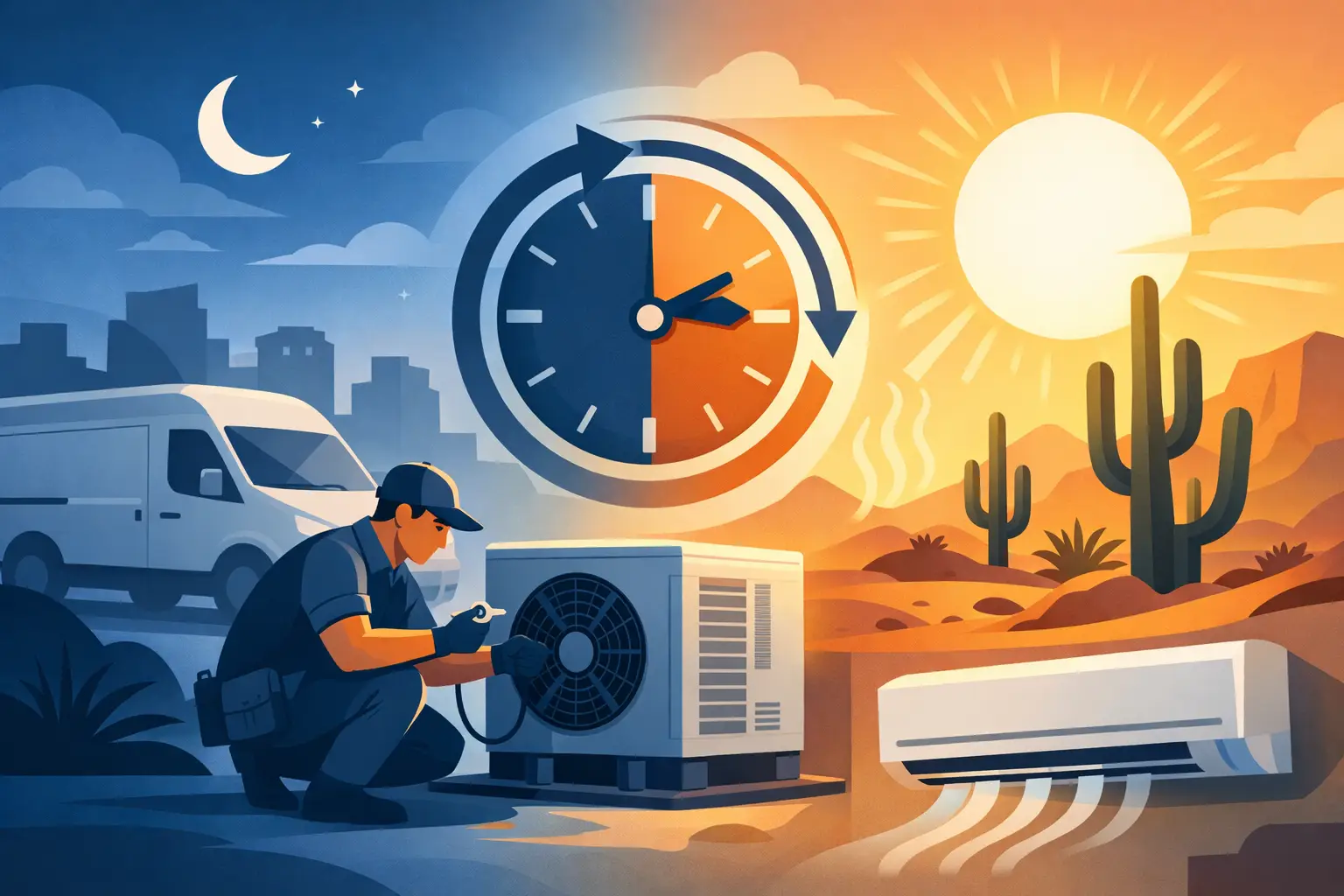
SMW Refrigeration & Heating has served local homeowners and businesses since 1964, with 24/7 AC repair available when cooling problems cannot wait. Whether the cause is a simple control issue or a more involved mechanical repair, timely testing protects your comfort and helps prevent avoidable damage.
If your AC is blowing warm today, start with the thermostat, filter, and breaker. If those checks do not restore normal cooling, turn off a system that is icing up, making unusual noises, or tripping power, and have it evaluated before the next hot afternoon puts even more strain on it.
Need HVAC Service?
Call SMW Refrigeration & Heating for expert service throughout Maricopa County.
Call (602) 992-1930Related service
AC repair & air conditioning service in Tempe →